
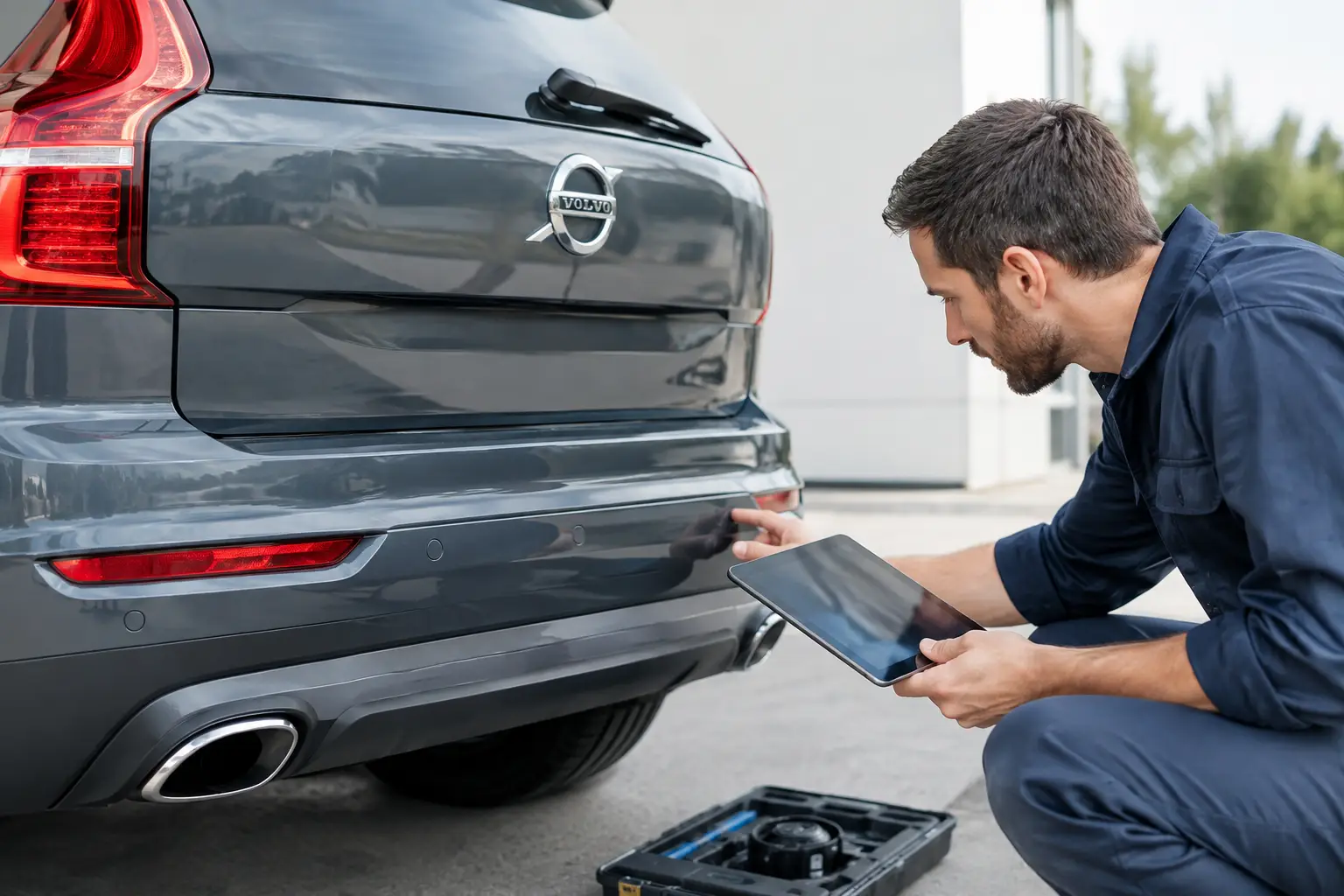
A single failed parking sensor can make every reverse into a noisy guessing game. If you need to fix Volvo parking sensors, do not assume the sensor itself is always at fault. Volvo parking aid systems rely on several components working together, and a proper diagnosis can prevent you from replacing good parts unnecessarily.
For Volvo owners, this matters because parking assistance faults are often intermittent at first. The system may work after a wash, fail in heavy rain, or display a warning only when reverse is selected. Acting early can be simpler and less costly than waiting for a minor fault to become a permanent warning message.
How Volvo parking sensors work
Most Volvo models use ultrasonic sensors in the front and rear bumpers to detect objects at low speed. When you select reverse or activate the parking aid function, the sensors send out sound waves and measure the returning signal. The vehicle then gives audible alerts, visual guidance on the display, or both.
The system also depends on the parking aid control module, wiring looms, bumper connectors, fuses and, on some models, camera and infotainment integration. A fault anywhere in that chain can trigger messages such as “Park Assist Service Required” or cause the warning tones to stop altogether.
That is why a quick visual check is useful, but it is not a substitute for vehicle-specific diagnostics. A Volvo specialist can read the stored fault codes, identify the affected circuit and test the sensor response before recommending a repair.
Signs your Volvo parking aid needs attention
A complete system failure is easy to spot, but early symptoms are more varied. You may hear one long tone when reverse is engaged and then nothing else. The parking aid graphic may disappear from the centre display, or the system may report an obstacle when the area is clear.
Some owners notice that the warning only appears after rain, following bumper work, or after a minor knock in a car park. These details are useful. They can point towards moisture in a connector, bumper misalignment or damaged wiring rather than a failed sensor.
If your Volvo has a reversing camera, remember that camera operation and sensor operation are not always the same fault. A camera may continue to display normally while the sensors are disabled, or a display issue may affect both functions. The fault codes and system test will show where the problem starts.
Common reasons Volvo parking sensors fail
The most common cause is a damaged or contaminated individual sensor. Road grime, wax residue, dried polish and heavy dirt can obstruct the sensor face. Sensors are designed for life outside the vehicle, but they still need a clean, unobstructed surface to work accurately.
Moisture is another frequent cause, particularly in humid conditions and after heavy rainfall. Water can enter a cracked sensor housing or corroded connector, creating an intermittent fault that becomes more regular over time. A bumper impact that appears cosmetic can also loosen a sensor holder behind the bumper or pinch part of the wiring loom.
Age-related wiring faults are possible too. Heat, vibration and repeated bumper repairs can weaken connectors or wires. In some cases, a blown fuse, control module issue or low battery voltage can disrupt the parking aid system. This is why replacing the first sensor that looks suspicious is not always good value.
Aftermarket accessories can occasionally be involved. Tow-bar electrical work, bumper modifications, non-standard lighting installations and previous accident repairs may affect wiring routes or connections. That does not mean the work is definitely responsible, but it should be considered during diagnosis.
Checks you can make before booking a repair
Start by cleaning each sensor carefully with water and a soft cloth. Do not use abrasive pads, strong solvents or a pressure washer held close to the sensor. A clean surface gives the system the best chance of working and lets you inspect the bumper properly.
Look for cracked sensor faces, loose sensors, paint damage, dents and uneven gaps around the bumper. Parking sensors that have been heavily painted during a respray can become less responsive, especially where paint has been applied too thickly. Note whether the problem is at the front, rear or both, and whether it occurs every time or only in certain weather.
You can also check whether other electrical functions are behaving normally. Slow starting, warning lights or recent battery trouble are relevant because modern Volvos manage electrical loads closely. However, avoid probing connectors, removing bumper trims or using generic fault-code tools to clear warnings without understanding the result. You may erase useful diagnostic information while leaving the actual fault unresolved.
How we fix Volvo parking sensors
A correct repair starts with a diagnostic scan suited to Volvo systems. The technician checks the fault memory, live sensor readings and control module communication, then confirms the fault with physical inspection and electrical testing where needed.
If one sensor has failed, it may be replaced with a quality new part and checked for correct operation. Where the sensor holder is broken or the bumper has been disturbed, the fitting and alignment need attention too. A sensor installed at the wrong angle can produce unreliable readings even when the part itself is new.
Where the issue is wiring-related, the repair should focus on the damaged section, connector or loom rather than fitting parts by guesswork. If diagnostics indicate a module, software or voltage-related concern, that must be addressed before calling the job complete. The aim is not simply to remove a dashboard warning, but to restore dependable obstacle detection when you need it.
At MTE Garage, Volvo-trained experience makes a difference here. We assess the whole parking aid system, use quality replacement parts and explain the repair required before work begins. For owners of premium vehicles, that is a more sensible approach than paying for repeated trial-and-error replacements.
Repair or replace: what affects the cost?
The final cost depends on the fault location and access required. Cleaning contamination from a sensor is straightforward. Replacing an individual rear sensor may be relatively contained, while front bumper access, wiring repairs or a control module concern can require more labour and testing.
Painted sensors can add another consideration. If a replacement needs colour matching, the finish must be applied correctly so it does not interfere with ultrasonic performance. A cheap painted replacement may look acceptable but give inconsistent alerts, which defeats the purpose of the repair.
There is also a difference between resolving an intermittent fault and simply waiting for it to become permanent. If the warning appears occasionally, diagnostic testing may take longer because the fault needs to be traced carefully. Even so, dealing with moisture damage or a loose connection early can help avoid broader corrosion or wiring issues later.
Do not rely on parking sensors alone
Even after you fix Volvo parking sensors, they remain an assistance feature rather than a replacement for observation. Low posts, narrow objects, uneven kerbs, heavy rain and dirt can affect detection. Always use mirrors, look around the vehicle and reverse at a controlled speed.
If your system has suddenly gone silent, gives a persistent false warning or displays a parking aid message, arrange a proper inspection rather than living with the fault. A clear diagnosis and a quality repair will put useful protection back into every tight parking space and busy car park.