
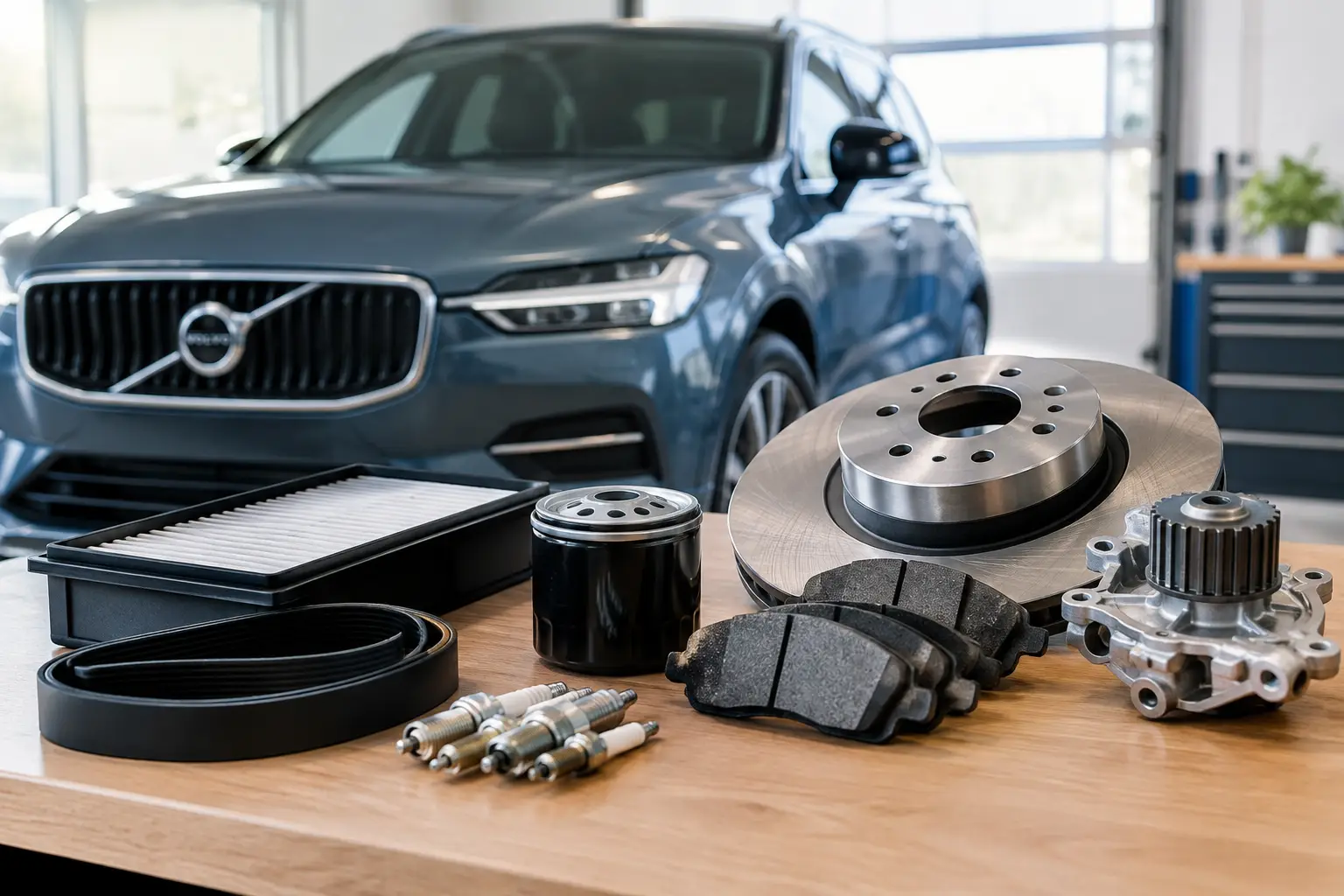
A brake pad that looks right on the shelf can still be wrong for your Volvo. The same applies to filters, batteries, suspension components and electronic sensors. Knowing how to choose quality car parts is not about paying for the most expensive box. It is about buying the correct part, from a dependable source, with a standard that protects how your car drives, stops and performs.
For premium European cars, small differences matter. Volvo, BMW, Mercedes and Volkswagen vehicles are engineered around precise specifications, and fitting a poor-quality or incompatible replacement can create faults that cost far more than the initial saving.
Start With the Exact Vehicle Specification
Before comparing brands or prices, confirm the part is designed for your exact vehicle. Your registration number is useful, but it does not always tell the full story. Model year, engine code, transmission type, trim level and chassis number can affect the correct component.
This is especially relevant for Volvo owners. A V40, XC60 or S90 may have different braking systems, sensors or battery requirements depending on its engine and factory specification. Two cars that appear identical can use different parts.
A professional workshop should check the vehicle identification number, known as the VIN, and refer to the correct parts catalogue before ordering. Do not rely on a product photo or a vague description such as “fits Volvo XC60”. Ask whether fitment has been verified against your car’s details.
Correct fit is more than convenience. An incorrect part can cause warning lights, poor performance, accelerated wear or a failed repair. On safety-critical systems, it can also affect your confidence behind the wheel.
Understand the Different Grades of Car Parts
Not every non-dealer part is low quality, and not every part in dealer packaging is the only acceptable choice. The key is understanding what you are being offered.
Genuine parts
Genuine parts are supplied under the vehicle manufacturer’s brand. They are designed to meet the manufacturer’s specification and are often the straightforward choice for complex electronics, software-related components and parts where exact calibration matters.
They can cost more, but there are situations where the added reassurance is worthwhile. This is often the case with specialised Volvo modules, certain sensors and components tied closely to vehicle systems.
OEM and original-equipment-quality parts
OEM generally refers to a part made by the same manufacturer that supplied the vehicle maker, though terminology can be used loosely in the market. Original-equipment-quality parts are built to match the required specification but may be sold under the component maker’s own brand.
For routine servicing and many wear-and-tear repairs, a reputable original-equipment-quality part can offer excellent value. The important question is whether it comes from an established manufacturer with a proven record for that application, not whether the packaging looks familiar.
Aftermarket parts
Aftermarket parts range from excellent to unacceptable. Some respected aftermarket manufacturers produce reliable braking, filtration, suspension and cooling parts. Others compete almost entirely on price, with inconsistent materials, poor tolerances and limited quality control.
A cheap part is not automatically a bad part. However, a significant price gap should prompt a sensible question: what has been removed from the manufacturing process to make it cheaper? It may be material quality, testing, machining accuracy or warranty support.
Prioritise Safety and High-Stress Components
Some parts deserve no compromise. Brakes, tyres, steering, suspension, wheel bearings, engine belts, cooling-system components and airbags all have a direct effect on safety or the risk of major mechanical damage.
Brake repairs are a clear example. Pads, discs and sensors work together, so fitting low-grade pads to save money can lead to noise, vibration, poor bite, excess brake dust or uneven disc wear. A quality set may cost more initially but usually provides better consistency and a more dependable driving experience.
The same logic applies to timing belts and water pumps. If these components fail, the repair bill can be substantial. A recognised brand, correct installation procedure and replacement of associated components are more valuable than a bargain part fitted in isolation.
For items such as cabin filters, wiper blades or bulbs, there may be more room to balance price and preference. Even then, the part should meet the correct specification and be suitable for your car’s electrical system.
Look Beyond the Purchase Price
The lowest quote is rarely the true cost of a repair. Consider the fitted price, the labour involved if the part fails early, and whether related work will need to be repeated.
A low-cost thermostat may be difficult to access. If it fails after a few months, you could pay for the same labour twice. A better-quality component with a meaningful warranty may therefore be the more economical choice.
This is where an experienced European-car workshop adds value. Technicians see which brands hold up in real driving conditions and which components tend to return with problems. Their recommendation should be based on fitment, reliability and the job at hand, rather than simply selling the highest-priced option.
Ask for a clear explanation when you receive a quotation. You should know whether the price includes the part, labour, consumables, diagnostic checks and any required coding or calibration. Transparency makes it easier to compare like for like.
Check the Supplier, Packaging and Warranty
Quality parts need a reliable supply chain. Counterfeit and grey-market components can look convincing, particularly filters, ignition parts, brake components and electronics. They may carry familiar logos while offering none of the expected performance or manufacturer backing.
Buy through an established workshop, recognised motor factor or authorised supplier. Keep invoices and warranty details. If a part is fitted by a garage, the paperwork should state what was installed and the warranty terms for both the component and workmanship.
Packaging alone is not proof of quality, but warning signs include missing part numbers, poor print quality, damaged seals, spelling errors and no traceable manufacturer information. A professional supplier should be able to identify the make, application and warranty of the part without hesitation.
Be cautious with online listings that make broad claims such as “universal fit” or “dealer quality” without a manufacturer name. These descriptions are not a substitute for verified compatibility.
Do Not Ignore Coding and Calibration
Modern European cars often require more than a physical replacement. Batteries may need registration to the vehicle’s battery management system. Brake work can involve electronic parking-brake procedures. Cameras, radar sensors, headlights and steering components may require calibration after repairs.
Fitting the right part without completing the correct electronic procedure can leave faults stored in the system or reduce performance. For example, an unregistered battery can affect charging strategy and battery life, while a poorly calibrated driver-assistance sensor may not operate as intended.
This is one reason specialist knowledge matters. The workshop should have suitable diagnostic equipment and understand the manufacturer-specific steps, particularly for Volvo systems. A quality repair is the correct part fitted properly, then tested properly.
Questions to Ask Before Approving a Repair
You do not need to become a parts expert, but you should be comfortable asking practical questions. Ask whether the part is genuine, OEM or aftermarket; whether it is confirmed for your VIN; and which manufacturer produced it. For major work, ask what related components should be replaced at the same time and whether coding, calibration or a road test is included.
Also ask about the warranty. A good warranty does not make a poor part good, but it shows that the supplier is willing to stand behind the product. More importantly, ask why that particular part has been recommended. A trustworthy workshop will give you a direct answer, including any trade-off between price, expected longevity and performance.
Choose Parts That Suit How You Use the Car
The right choice depends partly on your driving. A family Volvo used for daily school runs, motorway commuting and holiday trips needs dependable service parts and brakes that perform consistently in traffic. A performance-oriented European car may need components chosen more carefully for heat, load and driving style.
There is no advantage in paying for a track-focused brake compound if your car is used mainly in city traffic. Equally, choosing the cheapest available option for a heavily used vehicle can create false economy. Match the part to the car, the job and the way you drive.
MTE Garage works with Volvo and other continental vehicle owners who want that balance: quality replacement parts, correct diagnosis and practical advice without dealership-level guesswork. When a repair affects safety, reliability or long-term value, the best decision is usually the part and fitting method that you will not have to question again next month.