
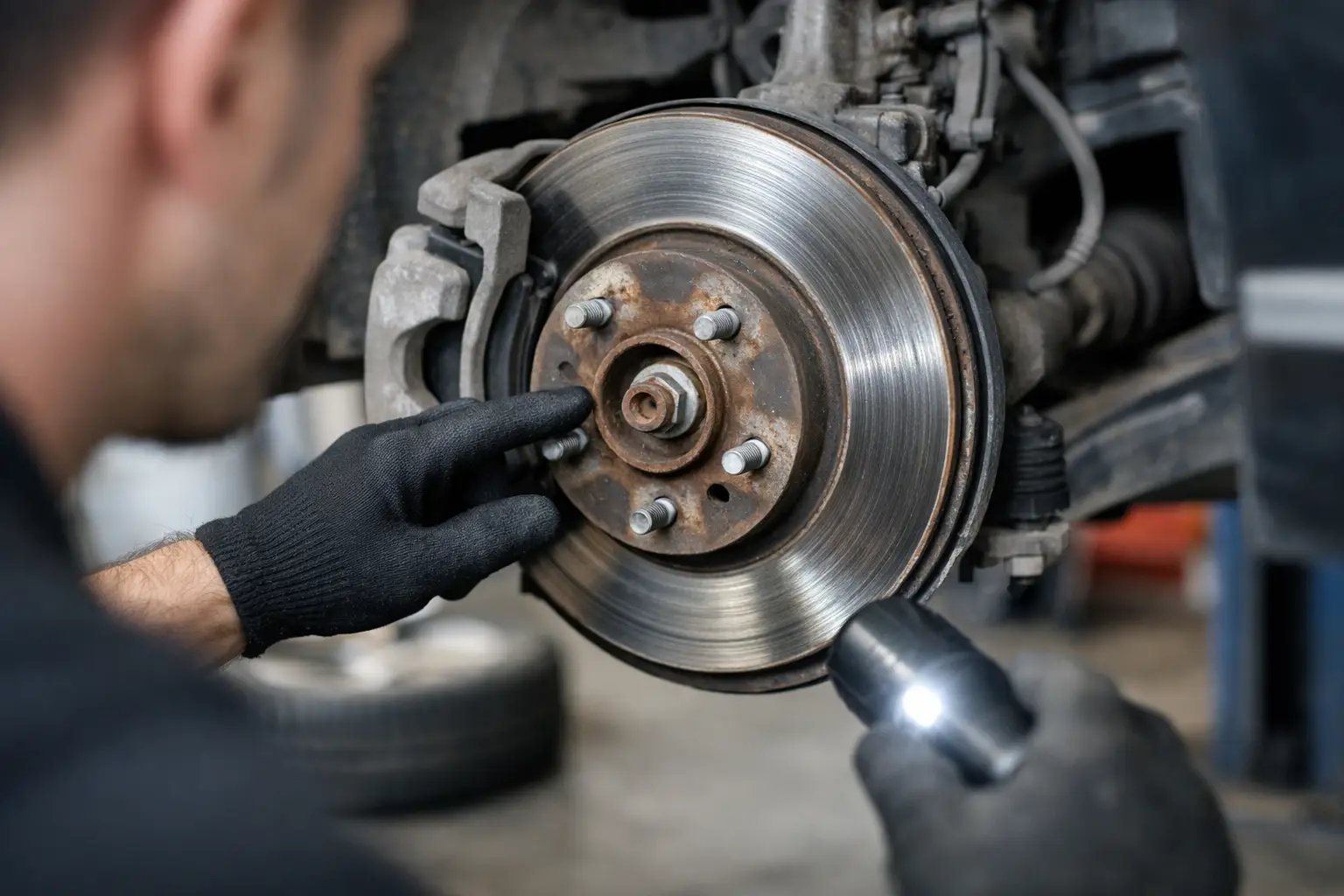
Your brakes rarely fail without giving you a few warnings first. The problem is that those warnings can be easy to dismiss during a busy commute, school run or weekend drive. Knowing how to spot brake wear early helps you avoid reduced stopping performance, damaged brake discs and a repair bill that grows far beyond a straightforward pad replacement.
For Volvo and other continental car owners, it pays to act on small changes. Modern braking systems are designed to deliver reassuring control, but they rely on components that wear gradually. A prompt inspection protects both your safety and the condition of your vehicle.
How to spot brake wear early while driving
The most useful signs are usually felt or heard before you can see anything. Pay attention to how the car behaves under normal braking, not only during a hard stop.
A high-pitched squeal when braking
A brief squeal after rain, washing the car or leaving it parked overnight is not automatically a fault. Surface rust can form on brake discs in humid conditions, particularly in Singapore, and often clears after a few controlled applications of the brakes.
Repeated squealing that continues once the brakes are warm is different. Many brake pads have a built-in wear indicator designed to make a sharp noise when the friction material is getting low. It is a useful warning, not something to turn the radio up over. Book an inspection before the pads wear down to their backing plate.
Grinding, scraping or harsh metal-on-metal noise
Grinding is more urgent than squealing. It can mean the brake pad material has worn away and metal is contacting the brake disc. Continuing to drive can score or overheat the disc, leaving a simple brake pad job as a more costly pads-and-discs repair.
Do not assume the noise will disappear on its own. If the sound is consistent when braking, minimise driving and arrange for the car to be checked promptly.
A brake pedal that feels different
Your brake pedal should feel firm, progressive and familiar. If it has become soft, spongy or travels closer to the floor than usual, the issue may involve worn components, low brake fluid, air in the hydraulic system or a fluid leak. These faults need professional diagnosis rather than guesswork.
A pedal that feels unusually hard can also require attention. Brake assistance systems, vacuum components and model-specific electronic controls can affect pedal feel. Premium European cars should be assessed with the correct diagnostic equipment and proper workshop procedures.
Pulling to one side under braking
If the vehicle pulls left or right when you brake on a straight, level road, do not ignore it. Uneven pad wear, a sticking brake caliper, contaminated brake surfaces, tyre issues or wheel alignment can all contribute. The exact cause depends on the car, but the effect is the same: less predictable braking and reduced control.
A steering wheel vibration or brake pedal pulsation can point to uneven disc surfaces, excessive disc run-out or another issue in the braking and suspension system. It may be most obvious when slowing from expressway speeds. A technician should inspect the full assembly rather than replacing parts based on one symptom alone.
Warning lights are there for a reason
A red brake warning light can indicate low brake fluid, an issue with the parking brake system or a hydraulic fault. An ABS warning light means the anti-lock braking system may not function as intended, even if the car still stops normally in everyday driving. Some models also display a brake pad wear message through the instrument cluster.
Do not treat a warning light as a reminder for your next routine service. Braking, ABS and stability-control systems work together, especially during emergency braking or wet-weather driving. Get the fault codes read and the system inspected as soon as possible.
It is also worth noting that a warning light does not always confirm worn pads. A faulty sensor or wiring fault may be involved. This is why a proper diagnostic check matters, particularly on Volvos, BMWs, Mercedes-Benz and other vehicles with integrated electronic safety systems.
What you can check safely at home
You do not need to remove a wheel to stay alert to brake condition. With the car parked safely, you can look through the wheel spokes at the visible outer brake pad and disc. A healthy pad has clearly visible friction material between the metal backing plate and the disc. If it looks very thin, arrange an inspection.
Look for deep grooves, heavy scoring or a pronounced outer lip on the brake disc. Light surface marks can be normal, but rough or heavily ridged discs deserve attention. Also watch for a vehicle that needs noticeably more distance to stop, a burning smell after ordinary driving, or a wheel that feels excessively hot. These can indicate a binding caliper or overheated brake components.
Avoid touching the discs, wheels or calipers immediately after driving. Brake parts become extremely hot. Do not spray lubricants, cleaners or water onto hot brakes either. If you are unsure what you are seeing, leave the inspection to a workshop.
Why early brake checks save more than money
Brake pads are designed to be replaced. Brake discs, calipers, hoses and electronic sensors are more expensive when neglected. Replacing pads at the right time may preserve the discs; allowing worn pads to grind into them will not.
There is also a performance reason to act early. Continental vehicles are engineered around specific braking characteristics. The correct pad compound, disc specification and fitting procedure influence pedal feel, stopping consistency, brake dust and noise. Cheaper parts that are poorly matched to the vehicle can create squeal, uneven wear or disappointing braking confidence.
For this reason, brake work should not be treated as a quick visual check followed by the lowest-price replacement. A proper assessment considers pad thickness, disc condition, caliper movement, brake fluid level, sensor operation and any stored fault codes. The rear brakes matter just as much as the front, even though front pads often wear faster.
When should brake pads and discs be replaced?
There is no single mileage figure that suits every driver. City traffic, frequent stop-start journeys, steep car parks, vehicle load, driving style and the car’s brake balance all affect wear. A Volvo used mainly for short urban trips may need pads sooner than the same model driven gently on longer motorway journeys.
Pads should be replaced before the friction material reaches its minimum safe thickness. Brake discs should be measured against the manufacturer’s minimum thickness specification, not judged by appearance alone. In some cases, pads can be replaced without discs. In others, worn, scored, heat-marked or undersized discs should be changed at the same time for safe, even performance.
Brake fluid is separate from pad and disc wear, but it should not be overlooked. Brake fluid absorbs moisture over time, which can reduce its performance under high temperatures and contribute to corrosion within the braking system. Follow your vehicle’s service schedule and use the correct fluid specification.
What to do if you notice a brake warning sign
If you hear persistent grinding, experience a major change in pedal feel, see a red brake warning light or feel the car pulling sharply under braking, do not delay. Avoid unnecessary driving and arrange an inspection. If braking performance is clearly reduced, use roadside assistance rather than taking risks on the road.
For less urgent signs such as occasional squealing, minor vibration or a pad wear message, book a brake check soon. MTE Garage can inspect braking components on Volvo and other continental vehicles, identify the actual cause and fit quality replacement parts where required. You receive clear advice on what needs attention now and what can reasonably be monitored.
Brakes are one area where acting early gives you control. A short inspection today can keep your car stopping straight, smoothly and confidently for every journey ahead.