
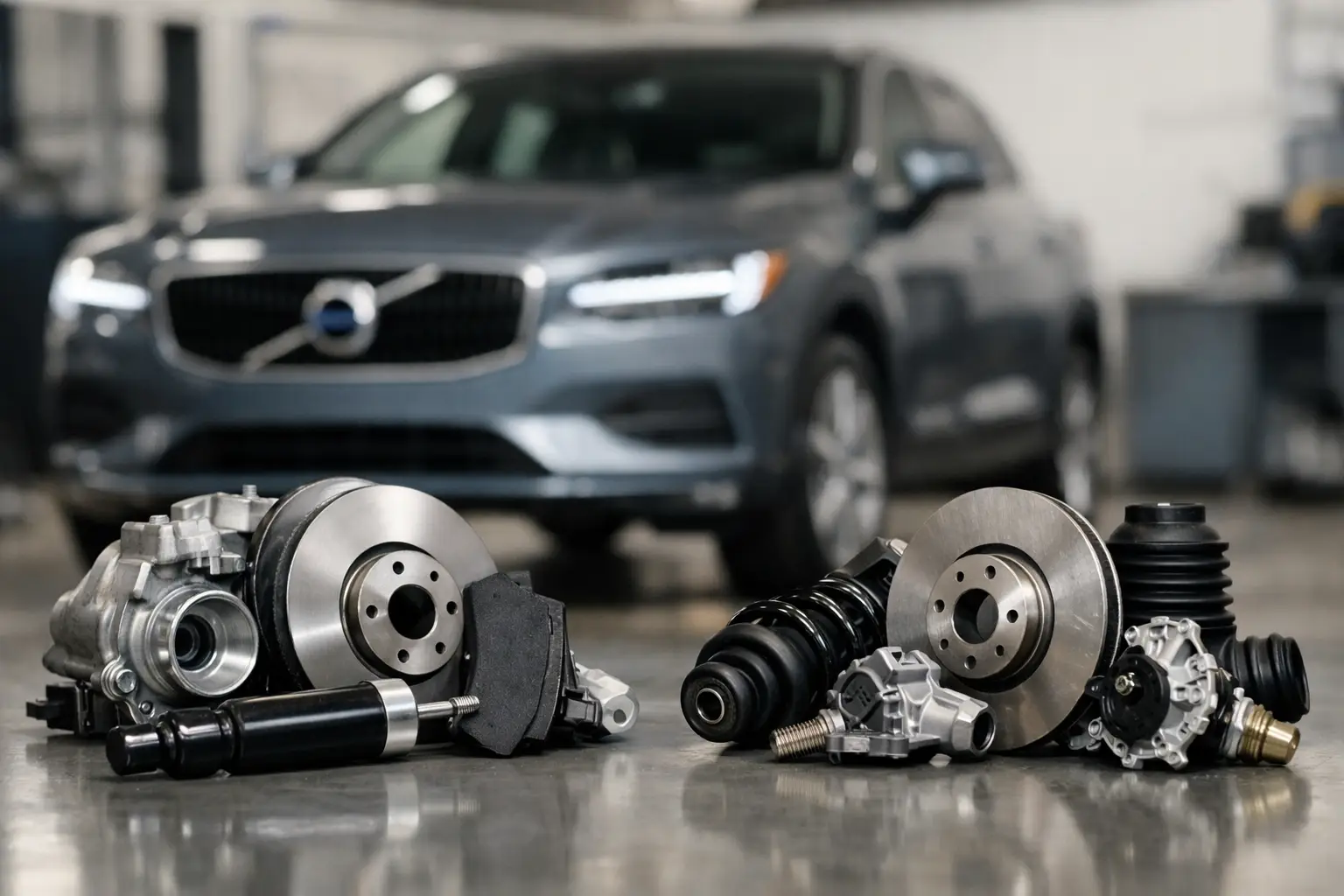
A brake warning light, a noisy suspension bush or an air-conditioning fault can quickly turn into a bigger decision: should you fit the original part, or choose a quality alternative? OEM versus aftermarket Volvo parts is not simply a choice between expensive and cheap. The right answer depends on the component, your model, how you use the car and the standard of the replacement part.
For Volvo owners, the priority should be clear. A repair must restore safety, reliability and the driving confidence the car was designed to deliver. Saving money on the wrong part can lead to repeat labour, warning lights or poor performance. Equally, paying dealership prices for every item is not always necessary when a proven aftermarket option is available.
OEM versus aftermarket Volvo parts explained
An OEM part is made by the original equipment manufacturer, or to the same original specification used when the vehicle was built. In practice, this term can cause confusion. A genuine Volvo part is supplied in Volvo packaging and carries the Volvo brand. An OEM equivalent may be produced by the same established supplier but sold under that supplier’s own name rather than through Volvo.
Aftermarket parts are made by companies outside the original supply chain. This category ranges from respected specialist manufacturers to low-cost, untested copies. That is why “aftermarket” alone tells you very little about quality.
A reputable workshop will identify the part source clearly and recommend it according to the job. For a Volvo, fitting a part because it is merely cheaper is not good practice. The part must match the vehicle’s specification, work correctly with its systems and be suitable for the conditions it faces.
When OEM parts are the sensible choice
OEM or genuine Volvo parts are often the safest option for components where exact fitment, electronic compatibility or manufacturer calibration matters. Modern Volvos rely heavily on interconnected sensors, control modules and software. A poor-quality replacement can create faults that are difficult and costly to diagnose.
Electrical components are a good example. Sensors, ignition parts, electronic parking-brake components, switches and certain control-related items may need the precise specification expected by the car. The same applies to items that affect safety systems, including airbags, seatbelt components and some braking electronics. There is no sensible compromise where safety or system communication is concerned.
OEM parts can also be worth choosing when your Volvo is newer, still under a manufacturer warranty, or has a full dealer service history you want to preserve. They offer certainty over fit, finish and specification, and may be the best route for owners who intend to keep the car in original condition.
The drawback is cost. Genuine branded packaging and dealer supply channels usually carry a higher price. That extra spend can be justified for critical components, but it should be considered part by part rather than applied automatically to every repair.
Parts where original specification matters most
For engine and gearbox-related repairs, the decision deserves particular care. Timing components, seals, transmission parts and engine-management sensors need to meet exact tolerances. A small saving on a poorly made part can become expensive if it causes a leak, drivability issue or premature failure.
Volvo-specific items such as trim, body fittings and certain interior components may also fit and finish better when supplied as genuine parts. If appearance matters, especially on a well-kept premium vehicle, the original item can avoid colour mismatches, awkward gaps and rattles.
When quality aftermarket parts offer strong value
A quality aftermarket part can be an excellent choice when it comes from a recognised manufacturer with a proven reputation. Many established suppliers produce braking, filtration, suspension, cooling and service components to high standards. In some cases, they also supply parts to vehicle manufacturers.
Routine maintenance is where this often makes most sense. Filters, brake discs, brake pads, batteries, wiper blades and certain suspension wear items may have high-quality alternatives that perform well and cost less than branded dealer parts. The key is to choose by specification and supplier reputation, not by the lowest quote.
For a family Volvo used for daily commuting, school runs and motorway journeys, good aftermarket service parts can provide dependable performance without inflating the maintenance bill. This can be particularly useful once the car is outside its manufacturer warranty period.
There is still a line to draw. Cheap aftermarket parts can vary in material quality, machining accuracy and lifespan. A poorly made brake disc may wear unevenly. A low-grade bush can introduce noise or vibration. An inferior sensor can trigger warning messages soon after fitting. Because labour is a major part of many repairs, replacing a failed budget part twice is rarely good value.
The real cost is not just the price of the part
When comparing quotes, look beyond the number beside the part. Consider how long the component should last, whether it comes with a clear warranty, and how much labour is involved if it fails early.
A cabin filter is quick to replace, so the risk of changing it again is limited. A gearbox seal, suspension arm or engine component may require several hours of labour. In those cases, using a known, high-quality part is usually the more economical decision over time.
It also matters how you drive your Volvo. Heavy city traffic, frequent short trips, high temperatures and humid conditions place extra strain on batteries, cooling systems, air-conditioning components and brakes. A part that is acceptable for light use may not be the best choice for a car that works hard every day.
Ask what is actually being fitted
A clear repair recommendation should tell you whether the proposed component is genuine Volvo, OEM equivalent or aftermarket, and why it is suitable. If a workshop cannot explain the brand, source or warranty position, that should raise questions.
You should also ask whether the repair requires diagnostic work, programming or calibration after installation. Certain Volvo components need the vehicle checked with suitable diagnostic equipment once fitted. Installing the physical part is only one stage of completing the job correctly.
How to choose the right option for your Volvo
Start with the importance of the component. For safety-critical parts and complex electronics, prioritise genuine or high-quality OEM specification parts. For routine wear-and-tear items, a reputable aftermarket manufacturer may provide the balance of performance and value you want.
Next, consider the age and condition of the vehicle. A newer Volvo with low mileage may justify genuine components throughout, particularly where warranty or resale presentation is a concern. For an older, well-maintained car, carefully selected aftermarket parts can keep ownership costs reasonable without reducing reliability.
Finally, choose the workshop as carefully as the part. Volvo repairs are not generic repairs. The technician should understand common model issues, correct service procedures and the difference between an appropriate alternative part and a false economy. The cheapest estimate may omit these details, while the highest estimate is not automatically the best one either.
At MTE Garage, the focus is on recommending the right new part for the repair, not applying one rule to every Volvo. That means considering safety, fitment, long-term reliability and your budget before work begins.
Before approving your next repair, ask for a straightforward explanation of the part being proposed and why it suits your car. A good decision now should leave you with a Volvo that feels right on the road, not a cheaper repair that returns to the workshop too soon.