
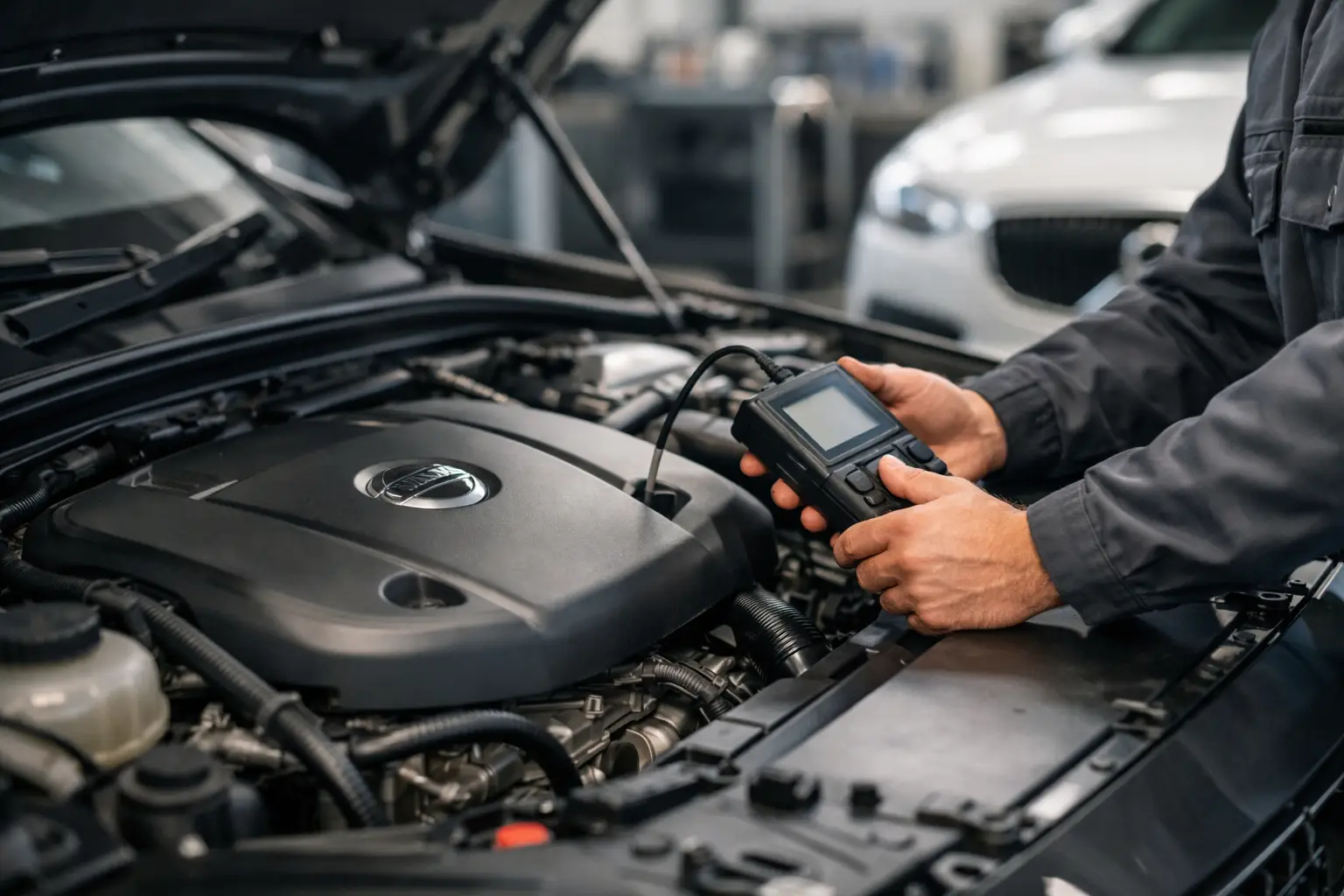
A Volvo warning light rarely tells the whole story. It may point to a loose fuel cap, a tired sensor or a fault that can cause expensive engine damage if ignored. Knowing how to diagnose Volvo engine faults starts with reading the symptoms in the right order, rather than replacing parts based on a dashboard message alone.
For Volvo owners, this matters because modern models rely heavily on electronic control systems. The engine, gearbox, emissions equipment, cooling system and electrical network all share information. One fault can therefore trigger several warnings, change how the car drives and produce diagnostic codes that need professional interpretation.
Start With the Warning Light and Driving Symptoms
The engine management light is the most familiar sign, but its behaviour matters. A steady amber light usually means the vehicle has recorded a fault that needs attention soon. A flashing engine light is more urgent. It can indicate an active misfire that may damage the catalytic converter, so avoid hard acceleration and arrange inspection promptly.
Before connecting diagnostic equipment, take note of what the vehicle is doing. Useful details include whether the problem occurs when the engine is cold or fully warmed up, during acceleration, at motorway speed or while idling in traffic. This information gives a technician a much better starting point than a warning light alone.
Look out for these symptoms, particularly if more than one appears at the same time:
- Loss of power, hesitation or a restricted-performance message
- Rough idle, vibration, misfiring or difficult starting
- Excessive fuel use, smoke or a noticeable fuel smell
- Overheating, low coolant warnings or the cooling fan running unusually often
A warning light that disappears is not necessarily a resolved fault. Many Volvo systems store intermittent codes and freeze-frame data showing the engine conditions when the issue occurred. That data can be crucial when a problem only appears occasionally.
How to Diagnose Volvo Engine Faults in the Right Order
A proper diagnosis follows evidence. The first step is a visual inspection of the engine bay for obvious issues such as damaged wiring, split intake hoses, oil leaks, coolant loss or disconnected connectors. A weak battery or poor battery connection should also be considered, especially if several unrelated warning messages appear together.
The next step is to scan the car with diagnostic equipment that can communicate fully with Volvo control modules. A basic code reader can be useful for identifying generic engine codes, but it may not access every manufacturer-specific code, live data stream or control module. On newer Volvos, that distinction is significant.
A fault code is a clue, not a repair instruction. For example, a code relating to oxygen sensor performance does not automatically mean the oxygen sensor has failed. It may be reporting the effect of an air leak, injector issue, exhaust leak or incorrect fuel mixture. Fitting a new sensor without confirming the cause can waste time and money.
A specialist technician will read both current and stored codes, then compare them with live engine data. This may include fuel trim values, air-flow readings, coolant temperature, boost pressure, ignition behaviour and sensor signals. The values are assessed against how the engine is running, not viewed in isolation.
Check the Basics Before Assuming the Worst
Some engine faults develop from routine maintenance issues. Low engine oil, degraded oil, an overdue air filter or a worn spark plug can all affect performance and trigger faults. Petrol Volvo engines may suffer from misfires when plugs or ignition coils begin to fail, while diesel models can show issues linked to air intake, turbo control, EGR operation or the diesel particulate filter.
Check the oil level only on level ground and according to the procedure for your model. If the oil warning appears, do not assume it is simply time for a top-up. Continuing to drive with low oil pressure can cause severe engine damage. Likewise, repeated coolant loss needs investigation. Coolant should not be disappearing under normal operation, and topping it up repeatedly may mask a leak or cooling-system fault.
Pay attention to recent work as well. If a warning begins shortly after servicing, battery replacement, repairs or an accident, it may be connected to a disturbed connector, an incorrectly fitted component, a vacuum hose or a system that requires adaptation or calibration.
Common Volvo Fault Areas and What They Can Mean
Volvo engines are built for durability, but every model and engine family has components that deserve close attention as mileage increases. The correct diagnosis depends on the model, year, fuel type and service history.
Misfires and Uneven Running
A petrol Volvo that shakes at idle, hesitates under load or produces a flashing engine light may have a misfire. Spark plugs, ignition coils, injector operation, air leaks and fuel pressure all need to be assessed. Simply clearing the code will not prevent the fault from returning.
If the misfire is confined to one cylinder, component testing and swapping can help confirm the source. If several cylinders are affected, the cause may be wider, such as an intake leak, poor fuel supply or a timing-related issue. Compression testing may be required where mechanical wear is suspected.
Turbo, Intake and Boost Problems
Reduced power is common where the engine cannot achieve the boost pressure requested by the control unit. A split intercooler hose, vacuum-control issue, sticking actuator, sensor fault or turbocharger problem can all produce similar symptoms.
The important point is not to condemn the turbocharger prematurely. Pressure testing the intake system and checking live boost readings are often needed before replacing expensive parts. On diesel models, carbon build-up in the intake or EGR system may also affect airflow and response.
DPF and Emissions Warnings
For diesel Volvo owners, short journeys can prevent the diesel particulate filter from completing regeneration properly. The result may be a DPF warning, poor performance or increased fuel consumption. A motorway run may help only if the filter loading and underlying systems are otherwise healthy.
Forced regeneration is not the right answer for every vehicle. If a pressure sensor, temperature sensor, injector, EGR valve or engine fault is preventing regeneration, the cause must be repaired first. Attempting repeated regenerations without diagnosis can create further problems.
Cooling and Overheating Concerns
A rising temperature gauge, coolant warning or sweet smell from the engine bay should never be ignored. Causes range from a leaking hose or expansion tank to thermostat, water pump, radiator or cooling-fan faults. Continuing to drive an overheating engine can lead to warped components and major repair costs.
A workshop should pressure-test the cooling system where appropriate and check for evidence of external leaks or combustion gases entering the coolant. The required tests depend on the symptoms and engine design.
Why Professional Volvo Diagnostics Save Money
Modern engine diagnosis is not just about plugging in a scanner. It requires model knowledge, accurate testing and the judgement to distinguish a root cause from a secondary code. This is particularly relevant when fault messages involve several systems or appear intermittently.
At MTE Garage, Volvo-focused diagnostics combine practical inspection with appropriate scan testing, so repairs can be based on confirmed findings rather than guesswork. Quality replacement parts matter too. A low-cost sensor or ignition component that fails early can bring the same warning light straight back and cost more in repeat labour.
There is also a sensible trade-off between monitoring a minor issue and acting immediately. A single historic code with no warning light or symptoms may warrant observation after checks are completed. A flashing engine light, overheating warning, heavy smoke, severe loss of power or unusual mechanical noise should be treated as an urgent problem.
What to Tell Your Technician
You can help speed up diagnosis by explaining when the fault began, whether the warning light is steady or flashing, and how the car feels when it happens. Mention recent servicing, refuelling, battery work, warning messages and any changes in fuel consumption. If you have used a basic scanner, provide the code but avoid treating it as a final diagnosis.
Do not clear codes repeatedly before an appointment unless instructed to do so. Clearing them can remove valuable stored information and make an intermittent problem harder to trace. If the car feels unsafe, is overheating or has a flashing engine light, stop driving where safe and arrange assistance.
The best time to investigate an engine fault is when it first appears. Early testing often turns an uncertain warning light into a contained repair, helping your Volvo remain reliable for daily driving, family journeys and the miles ahead.