
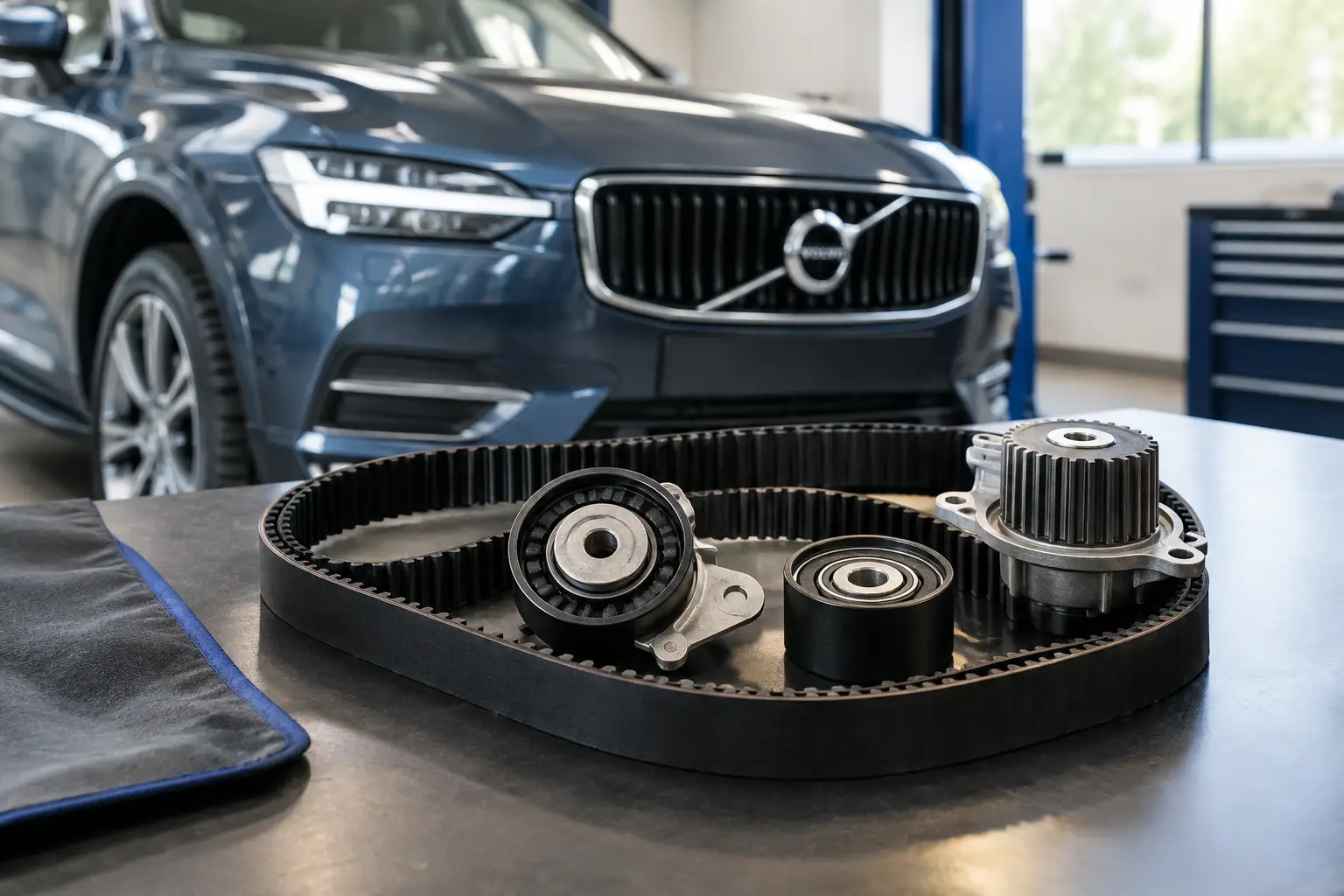
A timing belt is not a part to wait on. It may look like a simple reinforced rubber belt, but it keeps critical engine components moving in precise time. If it fails, the result can be far more serious than an inconvenient breakdown. This Volvo timing belt guide explains what owners need to know, when replacement is due, and why using a Volvo-experienced workshop matters.
What the timing belt does in your Volvo
The timing belt synchronises the crankshaft and camshaft. In practical terms, it ensures the pistons and valves move at exactly the right moment during every engine cycle. On many Volvo engines, that timing has very little margin for error.
When a belt snaps or jumps teeth, pistons may strike open valves. Depending on the engine, this can bend valves, damage cylinder head components and, in severe cases, cause extensive internal engine damage. A planned belt replacement is routine maintenance. Repairs after belt failure can become a major engine job.
Not every Volvo uses a timing belt. Some engines are chain-driven, and the service approach is different. This is why a workshop should confirm the exact engine and model rather than relying on general advice found online. A Volvo V40, S60, XC60 or XC90 may have different requirements depending on its model year, engine variant and service history.
Volvo timing belt replacement intervals
There is no sensible one-size-fits-all interval for Volvo timing belts. Replacement schedules vary by engine, and Volvo may specify both a mileage limit and a time limit. The belt should be changed when either limit is reached – even if the vehicle has covered relatively low mileage.
Low-mileage cars are often overlooked. Rubber ages over time, while heat cycles, humidity and long periods of inactivity can affect belt condition. This matters particularly in Singapore, where high ambient temperatures and stop-start traffic place sustained demands on engine components.
The correct interval should be checked against your vehicle’s registration details, VIN, engine code and manufacturer service schedule. If a recently purchased used Volvo has no documented timing belt replacement, treat that uncertainty seriously. It is usually wiser to inspect the records and arrange replacement early than gamble on an unknown belt.
A stamped service booklet is helpful, but invoices are better evidence. They should show the date, mileage, parts fitted and work carried out. A note saying “major service completed” does not always prove that the timing belt was replaced.
Mileage is not the only deciding factor
A car that is driven mostly on short urban journeys can experience many heat cycles without accumulating high mileage. Conversely, a regularly used motorway car may reach the mileage interval quickly. Neither pattern cancels the manufacturer’s time-based requirement.
Service history, driving conditions and the specific engine all matter. A specialist workshop can give a clear recommendation after confirming the vehicle details, rather than offering a generic interval that may not apply to your Volvo.
Signs your Volvo timing belt needs attention
Timing belts can fail with little warning, which is precisely why scheduled replacement is so important. Unlike brake pads, there is no reliable dashboard indicator that tells you the belt is nearing the end of its life.
That said, unusual engine noise, rough running, difficulty starting or a loss of power should never be ignored. These symptoms can arise from many faults, including ignition, fuel, sensor or air-intake issues, so they do not automatically mean the timing belt is at fault. Proper diagnostics are needed before any repair decision is made.
During inspection, a technician may find cracking, frayed edges, contamination from an oil or coolant leak, glazing, missing teeth or abnormal belt tension. Any of these concerns calls for prompt action. Oil contamination is particularly serious because it can degrade the belt material and shorten its working life.
If you hear a sudden noise followed by an engine that cranks but will not start, do not keep trying to restart it. Repeated cranking can worsen damage if the belt has failed. Arrange recovery and have the engine checked before further attempts are made.
What should be replaced with the timing belt?
A proper timing belt service is not just about fitting a new belt. The belt runs through a system of components, and worn tensioners, idler pulleys or guides can cause a new belt to fail prematurely.
For this reason, timing belt replacement normally includes the belt kit and associated tensioning components. On many Volvo engines, it is also sensible to replace the water pump at the same time if it is driven by the timing belt or is readily accessible during the work. The additional parts cost is usually far less than paying for much of the same labour again later.
The exact scope depends on the engine design and the condition of existing components. A reputable workshop should explain what is included, why each part is recommended and whether any additional work is essential or simply prudent preventative maintenance. This is the difference between a clear service recommendation and unnecessary upselling.
Do not overlook leaks and auxiliary belts
Before fitting new components, the technician should check for oil or coolant leaks around the timing cover area. Replacing a timing belt without addressing a leak that could contaminate it is false economy.
It is also worth checking the auxiliary drive belt and its tensioner. This separate belt powers items such as the alternator and air-conditioning compressor, depending on the model. It does not perform the same job as the timing belt, but replacing an aged auxiliary belt while access is available can be sensible.
Why specialist fitting matters
Timing belt work requires more than mechanical confidence. Correct timing marks, locking tools, torque settings and tensioning procedures are all critical. A belt installed one tooth out of position can lead to poor running, fault codes or serious engine damage.
Volvo engines have model-specific procedures, and parts quality matters just as much as fitting quality. Cheap unbranded kits may appear attractive, but the potential saving is small against the cost of labour and the risk of premature component failure. Quality replacement parts from established manufacturers provide better confidence for a job that is designed to protect your engine.
At MTE Garage, Volvo-trained experience, proper diagnostics and new quality parts help owners make practical maintenance decisions. You should receive a straightforward explanation of the recommended work, the parts involved and the expected cost before work begins.
A sensible plan for used Volvo owners
If you have just bought a used Volvo, make timing belt verification one of your first maintenance checks. Ask for the previous replacement invoice, not just verbal reassurance from the seller. Check the date and mileage against the correct interval for your engine.
Where records are incomplete, replacement is often the safer choice. It gives you a known starting point for future servicing and removes one of the biggest uncertainties associated with used-car ownership. Keep the new invoice with your vehicle records, as it will also help a future buyer understand that the car has been maintained properly.
There is a trade-off, of course. Replacing a belt early costs money before a visible problem appears. But timing belt maintenance is about preventing a failure that may offer no useful warning at all. For most owners, planned servicing is the better value than risking an avoidable engine repair.
Book before the belt becomes a problem
If your Volvo is approaching its scheduled timing belt interval, has unclear service records or is showing unusual engine symptoms, arrange an inspection promptly. Bring any previous service invoices with you so the workshop can assess the history accurately.
A timing belt replacement may not be the most exciting item on a service invoice, but it is one of the clearest ways to protect the reliability and long-term value of your Volvo. Deal with it on schedule, use the right parts, and drive away knowing the engine has been looked after properly.