
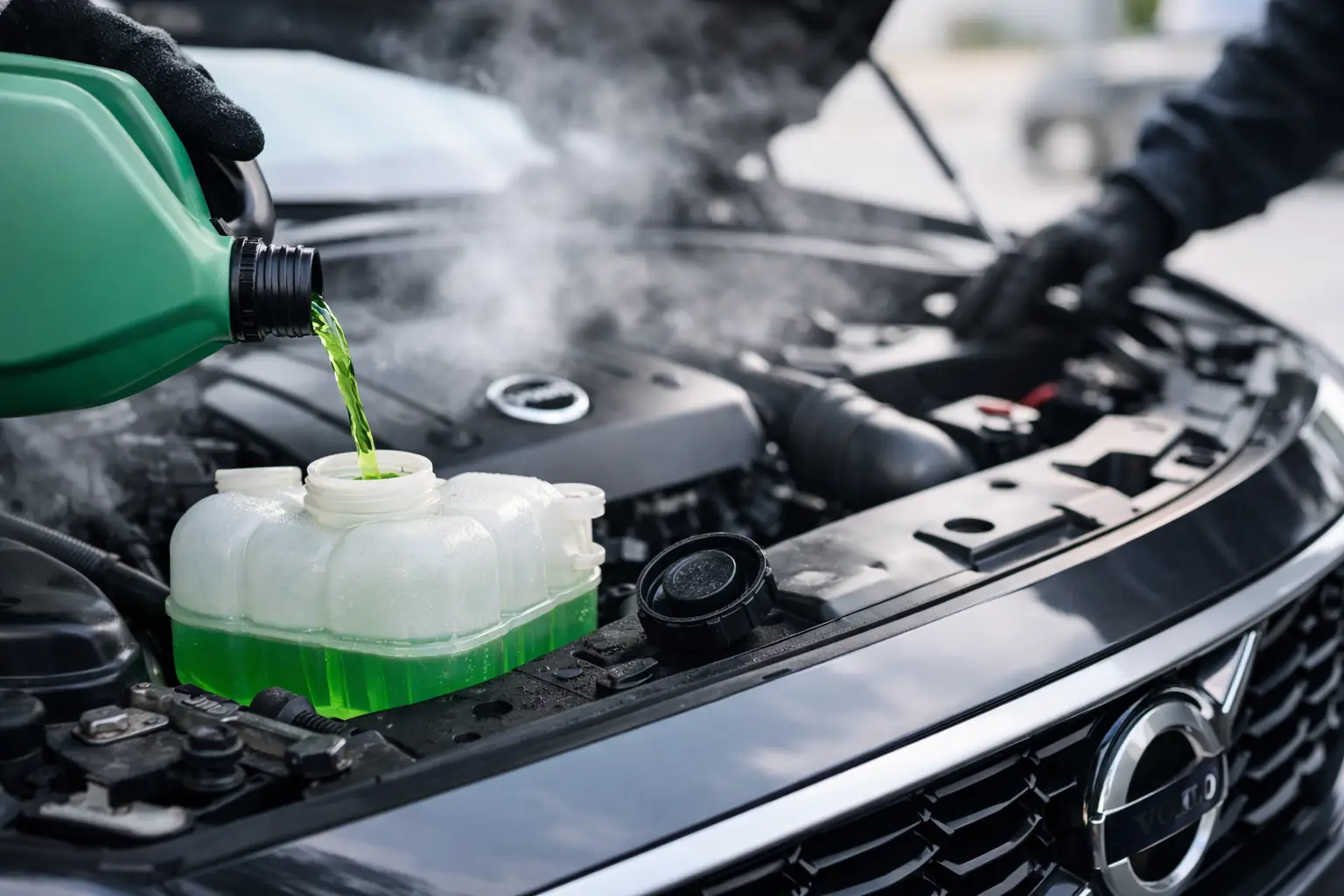
A coolant warning on a Volvo is not a light to ignore until your next service. Volvo coolant issues can begin with a small drop in the expansion tank level or a faint sweet smell after parking, but they can quickly develop into overheating, loss of power and expensive engine damage. In Singapore’s constant heat and heavy traffic, the cooling system works hard every day. A prompt inspection is usually far less costly than repairing the result of a major coolant loss.
Why Volvo coolant issues need specialist attention
Your Volvo’s cooling system does much more than stop the engine from overheating. It controls operating temperature, supports efficient combustion, protects internal components and helps the cabin heater and air-conditioning systems work as intended. Modern Volvo engines rely on electronically managed cooling components, sensors and precise coolant circulation. A generic diagnosis can miss the actual source of the problem.
A low coolant level does not automatically mean there is a visible puddle beneath the car. Coolant can escape slowly through a tired hose connection, a leaking expansion tank, a water pump seal or a radiator seam. In some cases, it may be lost internally. Simply topping up the reservoir can hide the warning temporarily while the underlying fault continues to worsen.
This is why an accurate pressure test and fault diagnosis matter. The workshop needs to identify where the coolant is going, whether the system is holding pressure and whether the engine has been affected by overheating. Replacing parts based on guesswork is not good value, even when the initial repair appears cheaper.
Warning signs of coolant problems in a Volvo
The dashboard coolant warning is the most obvious sign, but it is not the only one. Pay attention to changes in the way the car drives, smells or behaves after a journey. Owners should arrange an inspection if they notice any of the following:
- The coolant level repeatedly falls below the marked minimum level.
- A warning message appears for low coolant, high engine temperature or reduced engine performance.
- The temperature gauge rises higher than usual, particularly in traffic or while idling.
- There is a sweet smell, steam from the engine bay or pink, blue, green or orange residue around hoses and components.
- The cabin heater becomes inconsistent, or the cooling fan runs loudly for an unusually long time after the engine is switched off.
Do not open the coolant reservoir cap while the engine is hot. The system is pressurised and hot coolant can cause serious burns. Allow the car to cool fully before checking the level, and only use the coolant specification approved for your Volvo. Mixing unsuitable products can reduce corrosion protection and create further problems within the system.
Common causes of Volvo coolant leaks and overheating
Expansion tank and cap faults
The expansion tank is a common place to start. Plastic tanks can become brittle over time, especially after repeated heat cycles, and fine cracks may only leak once the system is hot and pressurised. A weak reservoir cap can also fail to maintain the correct pressure. That may sound minor, but pressure directly affects the coolant’s boiling point and the system’s ability to manage heat.
Hoses, joints and radiator leaks
Rubber hoses, clamps, quick-connect fittings and radiator end tanks all age. A hose can appear acceptable when cold yet leak under operating pressure. Coolant residue around a joint is a useful clue, but a proper pressure test is the reliable way to confirm it. On vehicles used mainly for short urban trips, leaks can go unnoticed because the engine may not remain at full temperature for long enough to make the fault obvious.
Water pump and thermostat problems
The water pump circulates coolant through the engine and radiator. If its seal leaks or the pump is not circulating coolant properly, engine temperature can climb rapidly. A thermostat that sticks closed restricts coolant flow, while one that sticks open can leave the engine running too cool and reduce efficiency.
These faults should not be diagnosed by temperature alone. A Volvo specialist will check live temperature readings, circulation behaviour, cooling fan operation and fault codes before recommending the right repair. This avoids replacing a thermostat when the real issue is a pump, sensor or control fault.
Radiator fan, sensor and electronic control faults
Many modern Volvos use electric cooling fans and electronically controlled thermostats. A faulty fan motor, relay, sensor or control module can prevent sufficient cooling at low speeds. This is why a car may seem normal on an expressway but begin overheating in slow-moving traffic.
The same symptom can have several causes. Proper diagnostics distinguish between a mechanical coolant leak and an electrical or electronic control issue, saving time and preventing unnecessary parts replacement.
Internal engine leaks
Less commonly, coolant loss may point to an internal engine issue such as a failed head gasket, cylinder head problem or heat exchanger fault. Signs can include persistent overheating, white exhaust smoke after the engine is warm, misfires on start-up, oily contamination in coolant or unexplained pressure in the cooling system.
These cases require careful testing before conclusions are drawn. Not every trace of moisture or exhaust vapour means a head gasket has failed. However, if there is evidence of internal coolant loss, delaying diagnosis can turn a repairable issue into substantial engine work.
What to do when the coolant warning appears
If the warning is accompanied by high engine temperature, steam or a strong coolant smell, stop safely as soon as possible and switch off the engine. Continuing to drive an overheating Volvo risks cylinder head distortion, damaged seals and severe engine damage. Calling for assistance is the sensible choice.
If the warning is for a low coolant level only and the temperature remains normal, let the engine cool completely before checking the reservoir. If the level is low, use only the correct approved coolant mixture where available. Treat this as a temporary measure, not a solution. Repeated topping up means the system needs inspection.
Avoid adding plain water except in a genuine emergency and only as a short-term measure. Water does not provide the corrosion protection or temperature performance required by the cooling system. It can also dilute the coolant mixture enough to create problems later, particularly in a vehicle already suffering from a leak.
The right repair starts with the right checks
A dependable coolant repair should begin with evidence, not assumptions. At MTE Garage, the process focuses on locating the fault and assessing the health of the wider cooling system before any work is recommended. This may include a visual inspection for residue and damaged parts, cooling-system pressure testing, electronic diagnostic checks, temperature readings and checks for combustion gases where an internal leak is suspected.
The required repair depends on what the inspection reveals. A cracked expansion tank or perished hose may be a straightforward replacement. A water pump, thermostat housing or radiator repair can be more involved, especially where access is limited. If overheating has already occurred, further checks are needed to confirm the engine has not suffered lasting damage.
Quality replacement parts matter here. Cooling components operate under heat, pressure and constant chemical exposure. A poor-quality cap, hose or sensor can create another fault soon after fitting, which is false economy for any Volvo owner planning to keep the car reliable.
Preventing repeat coolant problems
Cooling-system checks should be part of regular Volvo servicing, not only a reaction to a dashboard warning. The coolant level and condition, hose condition, tank integrity and signs of seepage can often reveal an emerging issue before it becomes urgent. Coolant should also be renewed at the correct interval using the specification suited to the vehicle.
Age, mileage and driving pattern all matter. An older Volvo with original plastic cooling components may benefit from closer monitoring, while a newer turbocharged model used in stop-start traffic can place extra demand on its fan, thermostat and pump. There is no single replacement timetable that suits every car, but there is a clear rule: investigate changes early.
A Volvo that holds the correct coolant level and temperature gives you confidence on every journey. If yours is asking for coolant, showing a temperature warning or leaving unexplained residue under the bonnet, arrange a professional inspection before a small leak becomes an engine repair.