
Singapore heat exposes weak air-conditioning quickly. If your Volvo, BMW, Mercedes or Volkswagen is taking longer to cool, smells damp, or blows warm air in traffic, aircon servicing should not be put off. A properly working system does more than keep the cabin comfortable. It helps clear misted windows, supports safe visibility and prevents a small fault from becoming an expensive compressor or evaporator repair.
For premium European cars, air-conditioning work is not simply a matter of adding refrigerant. The system needs to be checked properly, using the right equipment and an understanding of how the vehicle is designed. That is especially relevant for Volvo owners, where accurate diagnostics and quality replacement parts matter just as much as the regas itself.
When Does Your Car Need Aircon Servicing?
Air-conditioning performance usually deteriorates gradually, which is why many drivers adapt to the problem rather than addressing it. The cabin may still feel cool enough on a rainy morning, but struggle during the afternoon heat or when the car is fully loaded. By the time it stops cooling altogether, there may be a leak, a failing component or contamination within the system.
Book an inspection if you notice weak airflow, inconsistent cooling, a musty smell from the vents, unusual noises when the aircon is switched on, or water collecting inside the cabin. Windows that take too long to demist are another practical warning sign. If the aircon starts cold and then turns warm after a short drive, the fault may be more complex than low refrigerant and should be diagnosed before any gas is added.
There is no single servicing interval that suits every car. Usage, mileage, parking conditions and the age of the vehicle all play a part. In Singapore, where the aircon often runs on every journey, an annual check is sensible. It gives a workshop the chance to identify declining performance, minor leaks and worn components early.
What Proper Aircon Servicing Should Include
A worthwhile aircon service starts with diagnosis, not assumptions. Refrigerant does not simply disappear as part of normal operation. If the gas level is low, the system may have a leak. Topping it up without checking why it was low can provide temporary cold air, but it does not solve the underlying issue.
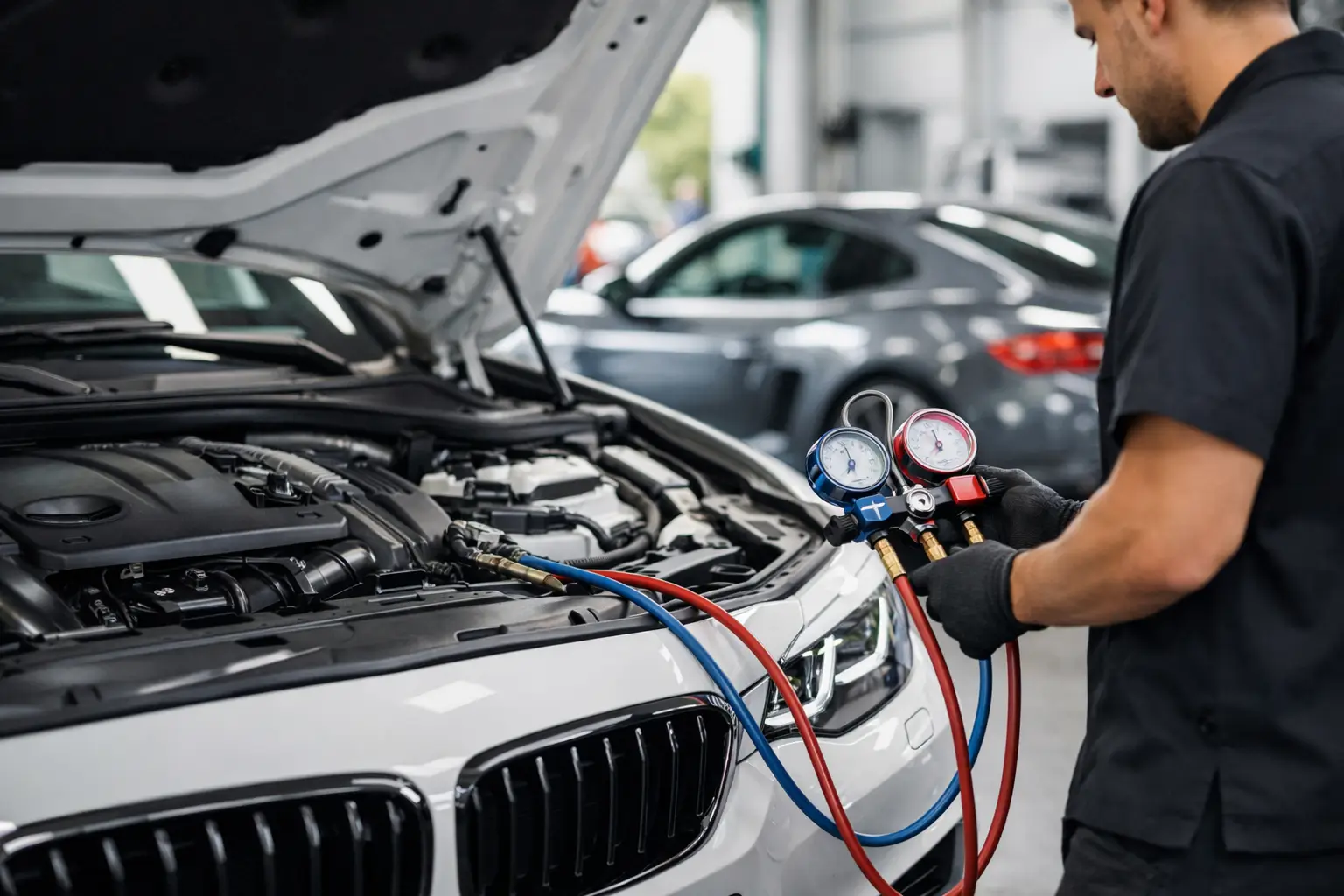
The technician should assess cooling output, inspect visible hoses and connections, check system pressures and test the operation of key components. These include the compressor, condenser fan, cabin blower and control functions. A fault-code scan may also be needed on modern European vehicles, as air-conditioning performance can be affected by sensors, control modules and climate-control settings.
If a leak is suspected, it should be located before the system is recharged. Depending on the issue, this may involve pressure testing, electronic leak detection or dye tracing. The correct refrigerant type and quantity must then be used. Modern vehicles may require different refrigerants, and overcharging or undercharging can reduce cooling performance and put unnecessary strain on the compressor.
A complete service can also include replacing the cabin filter and cleaning the evaporator area where appropriate. These are separate jobs, but they are closely connected to the quality of air entering the cabin. A dirty filter restricts airflow and can leave the interior smelling stale. Cleaning may reduce bacteria and mould build-up that causes unpleasant odours, particularly in cars regularly exposed to humidity.
Regas, Repair or Cleaning: Know the Difference
Drivers often ask for an aircon regas when the real need is repair. A regas restores the refrigerant charge after the system has been tested and evacuated. It is useful maintenance where there is a small loss of efficiency, but it is not a cure for damaged pipes, leaking seals, electrical faults or a worn compressor.
Aircon cleaning focuses on odours and hygiene. It can be helpful if the system smells musty when first switched on, but it will not fix poor cooling. Likewise, changing the cabin filter improves airflow and air quality, yet it cannot repair a refrigerant leak. A good workshop will explain which work is needed rather than sell every option as though it solves the same problem.
Repair becomes necessary when a component has failed. Common causes include a leaking condenser after stone damage, worn compressor parts, a faulty expansion valve, damaged hoses or an evaporator leak hidden behind the dashboard. The last of these can be labour-intensive because access is limited. That is why accurate diagnosis matters: replacing parts by trial and error is costly and avoidable.
Why European Cars Need a Careful Approach
Continental vehicles are engineered with tightly integrated electronic systems. The climate-control panel may appear straightforward, but the air-conditioning system can communicate with engine management, cooling fans, sensors and cabin controls. A warning light is not always present when something is wrong.
For Volvo vehicles in particular, workshop familiarity is valuable. A technician who understands the brand can assess the fault in context, whether it involves a pressure sensor, compressor control valve, cooling-fan operation or a broader electrical issue. The same practical approach applies to BMW, Mercedes, Volkswagen, Jaguar, Maserati, Renault and Ferrari models.
Part quality should not be treated as an afterthought. A cheap component can be tempting when an aircon repair bill is unexpected, but a poor-quality compressor, condenser or sensor may shorten the life of the repair. Where replacement is required, fitting suitable new parts protects performance and gives the owner clearer confidence in the work carried out.
Simple Habits That Protect Your Aircon
Air-conditioning systems benefit from regular use. Running the system periodically, including during wet weather, helps circulate lubricant through the compressor seals. The demist setting usually engages the aircon for a reason: it removes moisture from the cabin air more effectively than heat alone.
Keep the intake area near the base of the windscreen clear of leaves and debris. A blocked intake can affect airflow and contribute to damp smells. It is also worth replacing the cabin filter during scheduled servicing, particularly if you drive daily in heavy traffic or notice reduced blower strength.
Do not ignore a clicking, rattling or squealing sound that appears only when the aircon is running. Switching the system off may silence the noise, but it does not remove the cause. Early inspection can prevent a damaged component from affecting other parts of the system.
Finally, be realistic about what the aircon should achieve. On a very hot day, a car parked outdoors will not cool instantly. But after a few minutes of driving, the cabin should become consistently comfortable. If one side is cold and the other warm, if airflow remains weak at higher fan settings, or if cooling fades in stop-start traffic, it is time for a professional check.
Choose Diagnosis Before Guesswork
Aircon faults are easy to underestimate because the car can remain driveable. Yet continuing with a struggling system can lead to poor visibility in heavy rain, uncomfortable journeys for passengers and a larger repair later. The right service is not the fastest top-up available. It is a clear assessment of the system, a sensible repair plan and work completed to a proper standard.
At MTE Garage, European car owners can expect a practical approach to air-conditioning faults, backed by workshop experience and specialist Volvo knowledge. Whether the issue is weak cooling, an unpleasant smell or a suspected leak, booking an inspection early gives you the best chance of keeping the repair straightforward and your cabin properly cool when you need it most.