
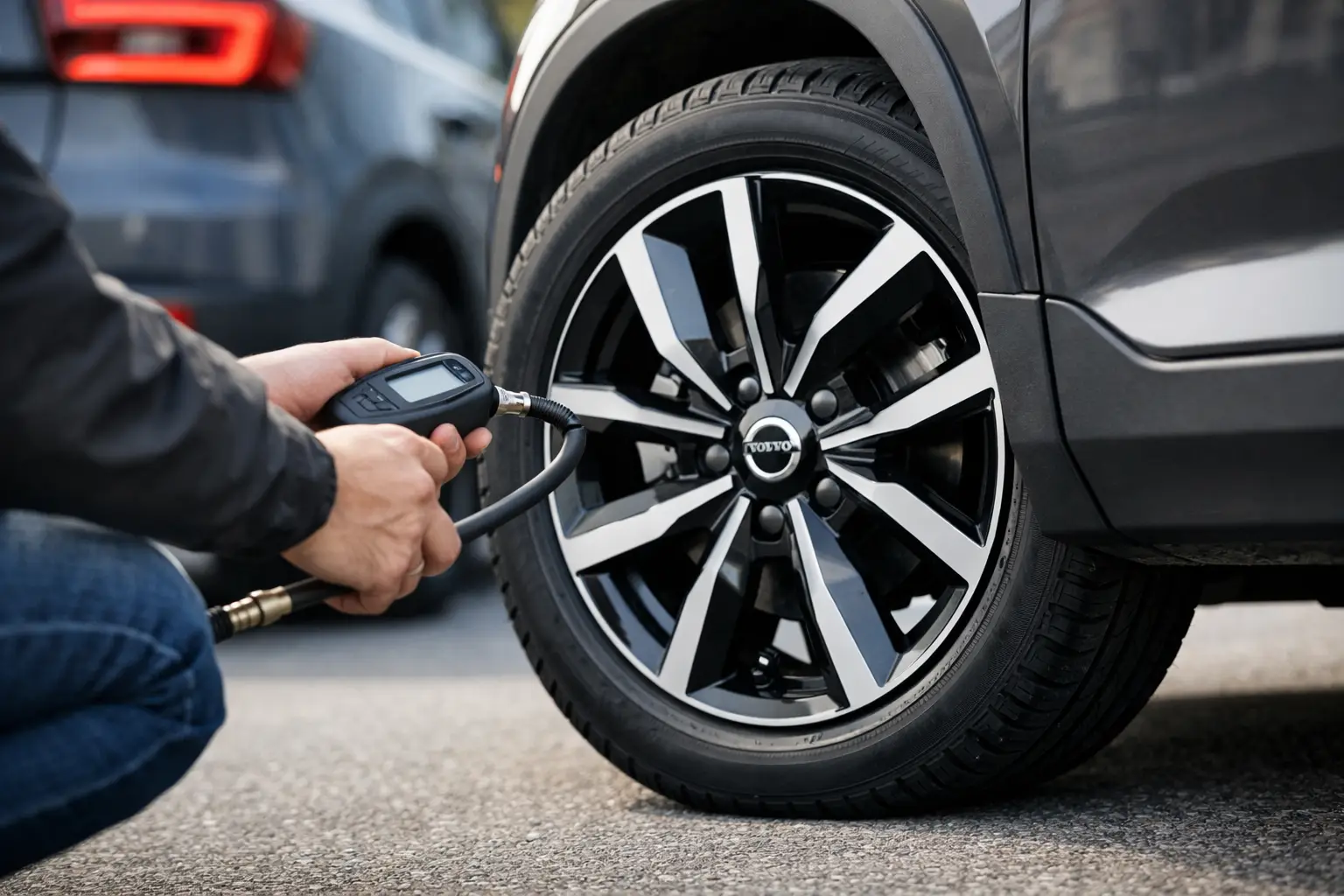
A tyre-pressure warning appearing just after you have inflated your tyres can be frustrating, especially when the tyres look perfectly fine. Knowing how to reset Volvo tyre pressure correctly helps the system recognise the new baseline, but the reset should never be used to dismiss a warning without checking the tyres first.
Volvo tyre pressure monitoring systems are designed to alert you when one or more tyres may be underinflated. Depending on the model and year, the car may use wheel-speed data to detect a change in tyre circumference, or it may use sensors fitted within the wheels. The process looks simple, but the correct pressure and calibration procedure matter. A reset performed with the wrong pressures stored can leave you without a useful warning when you need one.
Check tyre pressures before you reset Volvo tyre pressure
Start with the tyre-pressure label fitted to your Volvo. It is commonly found on the driver’s door pillar, fuel filler flap or in the handbook. This label gives the manufacturer-recommended pressures for the tyre size fitted to your vehicle, often with separate settings for normal loads and a fully laden car.
Check all four tyres when they are cold, ideally before a journey or after the car has been parked for several hours. Tyres warm up as you drive, which raises their pressure and can make a reading misleading. Do not guess based on how the tyre looks. Modern tyres can be significantly underinflated without appearing visibly flat.
Also inspect each tyre for a nail, screw, sidewall damage, unusual wear or a slow leak around the valve. If one tyre is substantially lower than the others, inflate it to specification but keep an eye on it. A recurring warning is not a reset issue. It is usually evidence that the tyre, valve, wheel or pressure sensor needs attention.
When should the Volvo tyre pressure system be calibrated?
Calibration is normally needed after changing tyre pressures, replacing a tyre, fitting a new set of wheels, or moving between normal-load and heavy-load pressures. It is also sensible to calibrate after tyre rotation, as the system needs an accurate reference point for the tyres now fitted in each position.
There is one key rule: only store or calibrate the pressure after every tyre has been set correctly. The system does not inflate tyres for you and, on many Volvo models, it does not measure the actual pressure shown on your air gauge. It stores a reference condition and watches for changes while driving.
A calibration may also be required after seasonal temperature changes. A drop in ambient temperature can reduce tyre pressure enough to trigger a warning, particularly after a cool night. In that situation, check the pressures first, correct them if necessary, then calibrate only once the tyres match the vehicle label.
How to reset Volvo tyre pressure through the car menu
The menu wording varies across Volvo generations, so use this as a practical guide rather than a substitute for your owner’s manual. On many newer Volvos with a centre touchscreen, the setting is found under Car Status or Vehicle Status, then TPMS or Tyre Pressure Monitoring System. Look for an option such as Store Pressure, Reset, or Calibrate.
On older Volvo models with the Sensus system and physical controls, the route may be under MY CAR, followed by Tyre Pressure and then Calibrate Tyre Pressure. Some cars may display a confirmation message asking you to store the current pressure values.
With the vehicle safely parked and the ignition in the required position, select the calibration option and confirm it. Once stored, drive the car normally. The warning may not disappear immediately because the system often needs to monitor wheel rotation for a short distance before it can confirm the new reference values.
Avoid repeatedly pressing reset while driving or while the warning is active without checking the tyres. If the message remains after a correct pressure check and calibration drive, there may be a fault or a genuine loss of pressure.
Why the warning may remain after calibration
A warning light that stays on does not automatically mean the reset has failed. Some Volvo systems need several minutes of driving at normal road speed before they complete the learning process. Stop-start traffic, very short trips and low-speed driving can delay this.
However, a persistent message can also point to a problem that calibration cannot solve. Common causes include a puncture, a leaking valve, a damaged wheel rim, mismatched tyres, incorrect tyre sizes or a malfunctioning tyre-pressure sensor on models that use direct sensors.
If the system displays a specific tyre position, inspect that tyre closely. If it simply gives a general tyre-pressure warning, check all four tyres and do not forget the spare where applicable. A tyre can lose pressure slowly enough to avoid a dramatic change in handling, yet still affect braking, fuel consumption and tyre life.
Volvo tyre pressure reset mistakes to avoid
The most common mistake is resetting the system immediately after topping up one tyre at a petrol station. If the other tyres have not been checked, the car may store an inaccurate baseline. The next warning could then arrive late, or appear when there is no new problem.
Another mistake is using the maximum pressure printed on the tyre sidewall. This is not the recommended running pressure for your Volvo. Always follow the vehicle label, which takes account of the car’s weight, tyre specification and intended load.
Do not reduce pressure simply because a tyre-pressure warning appears after motorway driving. Warm tyres naturally show a higher reading. Check them cold before making adjustments, unless there is an obvious puncture or safety concern that needs immediate action.
Finally, do not assume every replacement wheel or aftermarket tyre combination will work perfectly with the system. Wheel size, tyre profile and sensor compatibility can all affect monitoring. This is particularly relevant when fitting non-standard alloys or changing from factory wheel sets.
When a workshop inspection is the right next step
Book an inspection if the warning returns repeatedly, one tyre loses pressure between checks, the tyre is visibly damaged, or the system reports a TPMS fault rather than a low-pressure warning. A workshop can pressure-test the tyre, inspect the valve and rim sealing surface, assess tyre wear, and diagnose sensor or communication faults where fitted.
For Volvo owners, correct diagnosis matters. Replacing a sensor without confirming the fault can be an unnecessary expense, while repeatedly clearing a warning can allow a slow puncture to develop into tyre damage. A specialist workshop can identify whether the issue is simple calibration, a repairable puncture, a failed sensor battery or a wheel-related problem.
MTE Garage can check the tyre condition, verify pressures against your Volvo’s specification and diagnose persistent monitoring-system warnings with the right equipment. It is a straightforward check that protects the tyres, handling and safety systems your Volvo relies on.
A tyre-pressure reset is useful only when it follows a proper inspection and accurate inflation. Treat the warning as an early prompt, not an inconvenience, and your Volvo will be far better prepared for the miles ahead.