
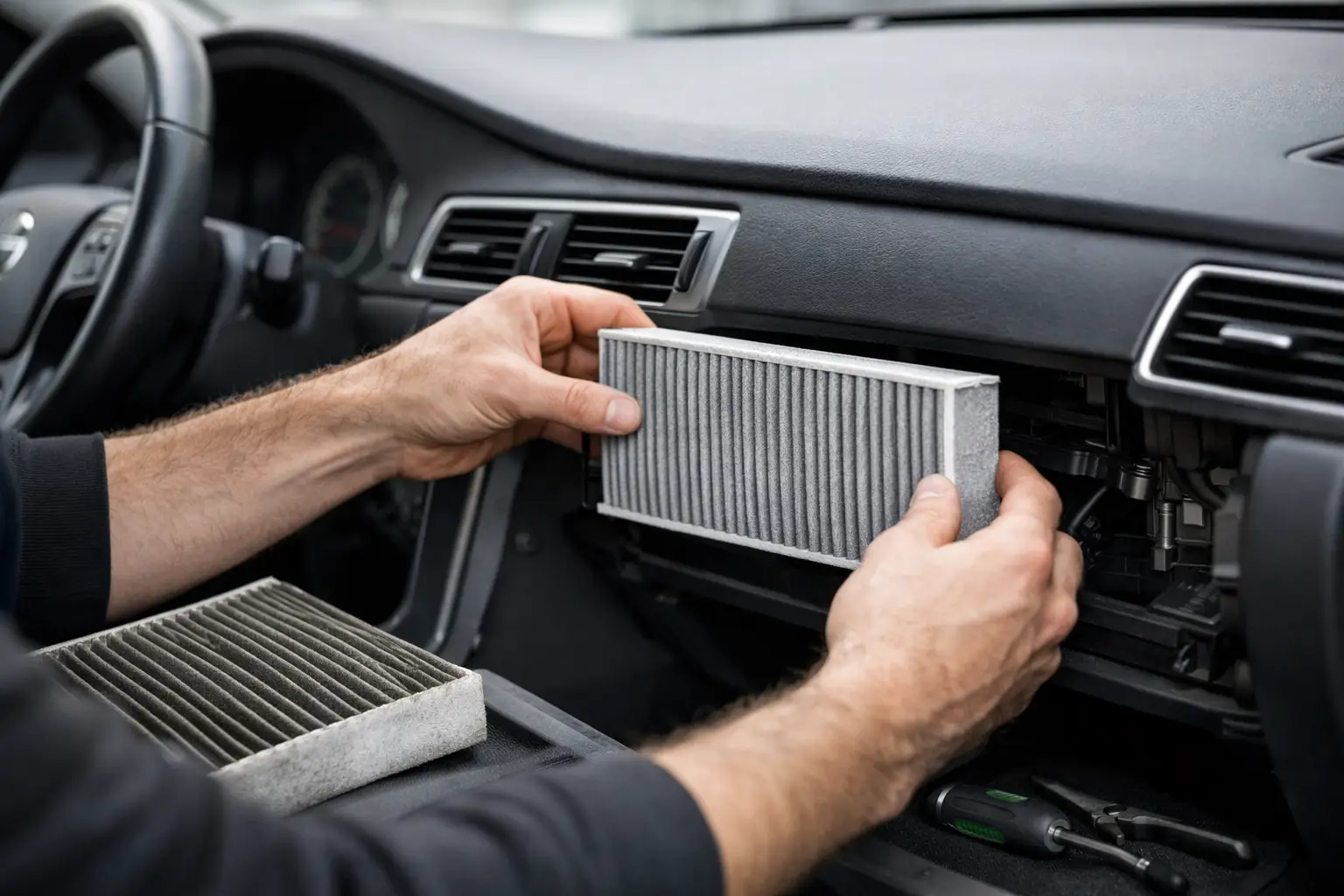
A Volvo cabin filter is easy to overlook because it does not affect how the car starts, brakes or accelerates. Yet in Singapore’s heat, rain and heavy traffic, a blocked filter can quickly make every journey less comfortable. If you need to replace Volvo cabin filter components, doing it at the right interval helps keep the air-con effective, the cabin fresher and the ventilation system working as intended.
The cabin filter, also called a pollen filter or passenger-compartment filter, sits within the ventilation system. It traps dust, road grime, pollen and other airborne particles before air reaches the interior. On many Volvo models, a quality activated-carbon filter can also reduce odours and some traffic-related pollutants.
It is a small service item, but it deserves proper attention. The wrong filter, an incorrect fit or damaged trim during installation can turn a straightforward job into an unnecessary workshop visit.
When should you replace a Volvo cabin filter?
Volvo service schedules vary by model, model year and driving conditions. As a practical rule, many owners replace the cabin filter during annual servicing. However, Singapore’s humid climate, frequent air-con use and stop-start driving can justify checking it sooner.
Do not wait solely for a scheduled service if you notice changes in cabin comfort. A filter may need replacing earlier when it has been exposed to construction dust, haze, leaves, moisture or heavy road traffic. Cars used daily for school runs, commuting and long periods in urban congestion tend to load their filters faster than vehicles used occasionally.
A visual check gives the clearest answer. A filter that looks dark, dusty, damp or distorted has done its job and should be renewed. It is not worth trying to vacuum or wash a disposable cabin filter. Cleaning the surface does not restore airflow through the filter material, and moisture can encourage unpleasant smells.
Signs it is time to replace Volvo cabin filter parts
The first sign is often weaker airflow from the air-con vents. You may still feel cold air, but the fan has to work harder and the cabin takes longer to cool. That is particularly noticeable after the car has been parked outdoors.
A persistent musty smell when the air-con starts is another common complaint. A dirty cabin filter can contribute to this, especially if it has absorbed moisture. However, it is not always the only cause. Odours may also come from bacterial growth on the evaporator, a blocked drain, damp carpets or debris in the air intake area.
Other useful warning signs include windows that mist up more readily in wet weather, increased fan noise at higher blower settings and visible dust coming through the vents. These symptoms do not automatically mean the filter is at fault, but they are good reasons to have the system inspected.
The right filter matters as much as the replacement
Not every cabin filter offers the same protection or fit. A basic particle filter is suitable for routine dust control, while an activated-carbon version adds odour reduction and improved filtration of certain gaseous pollutants. For many Volvo owners driving regularly in Singapore, the activated-carbon option is a sensible choice.
The filter must also match the exact Volvo model. Dimensions, sealing edges and airflow direction differ across the range, including popular models such as the XC40, XC60, XC90, S60 and V60. A filter that is only slightly too small can allow unfiltered air around its edges. One forced into place may buckle, restrict airflow or fail to seal properly.
Quality replacement parts are worth the modest extra cost. Cheap filters can use thin media, weak frames or poor seals. They may look similar in the box but can collapse or allow more contaminants through under regular air-con use. For a premium vehicle, fitting the correct high-quality part is the more sensible long-term decision.
How the cabin filter replacement should be carried out
The location of the filter depends on your Volvo. Many models place it behind trim in the passenger footwell or around the glovebox area. Access can be tight, and newer vehicles may have clips, panels, wiring or soft-close trim that should be handled carefully.
A proper replacement begins by confirming the correct part number and inspecting the ventilation area for leaves, dust or signs of moisture. The old filter is then removed without scattering accumulated debris into the blower housing. Before the new filter goes in, the technician checks the airflow arrow printed on its frame and ensures the filter is seated evenly in its housing.
This direction matters. The arrow normally shows the intended flow of air through the filter, but its orientation varies according to the design of the system. Guessing can reduce filtration performance and cause the material to deform. The cover must then be refitted securely, with every panel and fastener returned correctly.
On some cars, replacing the cabin filter is a manageable DIY task for an experienced owner with the right tools. It is less suitable if access requires removing delicate trim, working around electrical connectors or contorting the filter into a narrow space. Saving a little on labour is not worthwhile if a glovebox panel, clip or wiring connector gets damaged.
A new filter will not fix every air-con problem
This is where a specialist inspection adds value. If the blower remains noisy, airflow is still poor or an odour returns soon after the filter is changed, the fault may sit elsewhere in the climate-control system.
An air-con system may need evaporator cleaning, drain servicing, refrigerant checks or blower-motor diagnosis. If cooling itself is weak, the issue could involve refrigerant level, a compressor fault, a pressure sensor or another component. Replacing the filter is still good maintenance, but it should not be used as a blanket answer for every ventilation complaint.
The same principle applies to fogging windows. A fresh cabin filter supports airflow, but recurring condensation may point to a damp interior, a water ingress issue or a climate-control fault. A workshop should diagnose the cause rather than replace parts on assumption.
Why Volvo specialist servicing is the practical choice
Volvo interiors are designed well, but modern models are not built around careless removal and refitting. Specialist technicians understand the usual access points, the correct filters for each model and the signs that a ventilation issue needs more than a routine replacement.
At MTE Garage, Volvo servicing is approached as preventative maintenance, not a quick parts swap. The aim is to fit the right new part, protect your vehicle’s interior trim and identify related air-con concerns before they become more inconvenient or expensive.
Replacing the cabin filter during routine servicing is usually the most efficient option. It allows the technician to assess the air-con performance at the same visit and gives you a clear record of when the filter was renewed. If you are already booking an oil service, brake inspection or air-con service, it makes practical sense to have the cabin filter checked at the same time.
Simple habits that help the new filter last
Keeping leaves and debris away from the windscreen cowl intake can reduce what enters the ventilation system. After driving through very dusty conditions or prolonged haze, it is sensible to check the filter earlier than planned. Running the air-con regularly also helps manage moisture within the system, although it will not replace the need for proper servicing.
If there is a musty smell, avoid masking it with strong fragrance sprays. These can make the cabin unpleasant without addressing the source. Ask for an inspection while the issue is still minor.
A clean cabin filter is one of the simplest ways to make a Volvo feel properly maintained. If the airflow has weakened, the air-con smells stale or the filter has been in service for too long, arrange a check and let a Volvo-trained workshop fit the right replacement before daily driving becomes less comfortable.