
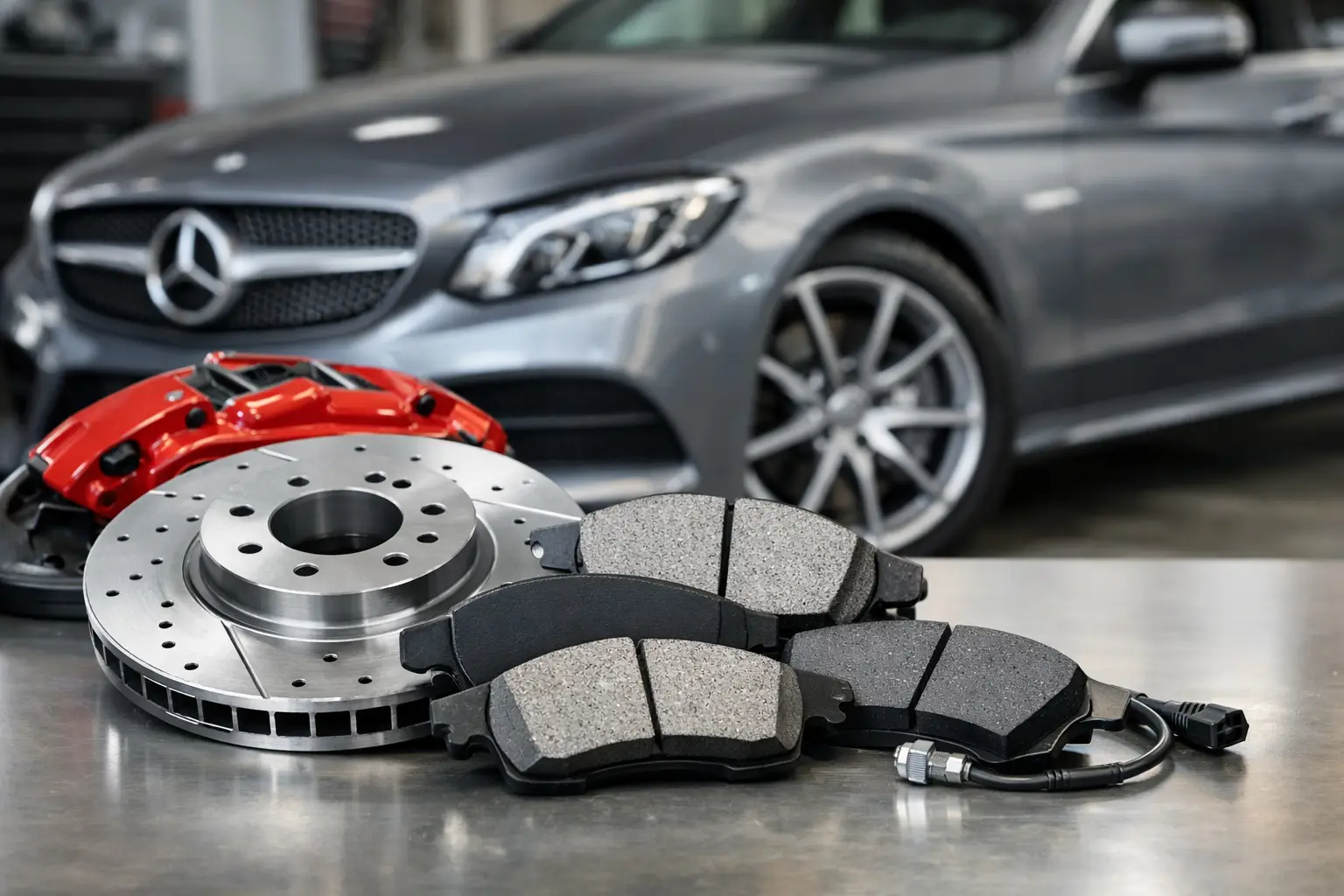
A brake pad that looks right on the shelf can still be wrong for your car. European vehicles are engineered with specific disc materials, brake calipers, vehicle weights and electronic safety systems in mind. Choosing the best brake pads for European cars is therefore not simply about buying the most expensive set or selecting the lowest quoted price. It is about fitting the correct quality pad for the way your Volvo, BMW, Mercedes-Benz, Volkswagen, Jaguar or other continental car is used.
For daily Singapore driving, the right pads should provide confident stopping power in traffic, remain predictable in wet conditions, control noise and protect the brake discs from unnecessary wear. A specialist workshop will assess the complete braking system before recommending parts, because pads alone never tell the full story.
What makes brake pads suitable for European cars?
European cars often use more advanced braking systems than generic family vehicles. A heavy Volvo SUV, performance BMW saloon or Mercedes-Benz estate may have large ventilated discs, electronic brake distribution, brake wear sensors and calipers designed around a particular pad compound. Fitting a poor-quality alternative can lead to squealing, excessive brake dust, reduced pedal feel or accelerated disc wear.
The best choice normally starts with either genuine manufacturer-specification parts or high-quality aftermarket pads made to meet the same application requirements. The right pad must match the exact model, engine variant, chassis specification and brake system. Even within one model range, brake disc diameters and caliper designs can differ.
This is why part selection should be based on the vehicle identification details and a physical inspection, rather than assuming that all pads for a particular badge are interchangeable.
Best brake pads for European cars: choose by driving needs
There is no single brake pad that suits every European vehicle and every driver. The best option depends on how the car is driven, its weight, the condition of the discs and the owner’s priorities.
OEM-quality pads for everyday confidence
For most owners, OEM-quality replacement pads are the sensible choice. These are designed to deliver braking behaviour close to the car’s original setup, with a balanced combination of bite, comfort, dust control and service life. They are particularly suitable for daily-driven Volvos, Mercedes-Benz cars, Volkswagen models and BMWs used mainly for commuting, school runs and motorway travel.
A quality OEM-equivalent pad is often better value than a dealer-branded part while avoiding the compromises commonly found in unbranded budget pads. The key is quality control and correct fitment, not just the name on the box.
Low-dust pads for cleaner wheels
Some premium European cars produce noticeable brake dust, especially when fitted with softer factory-style compounds. Low-dust pads can be a practical choice for owners who want cleaner alloy wheels and less frequent washing.
There is a trade-off. Certain low-dust compounds may feel slightly different under the pedal or offer less initial bite when cold than a more aggressive original-style pad. On a normal road car this difference may be acceptable, but the pads still need to be from a reputable manufacturer and approved for the vehicle’s braking system.
Performance pads for demanding driving
Performance-oriented pads are made to tolerate higher temperatures and maintain braking strength during repeated hard stops. They may suit powerful models or drivers who regularly travel at higher speeds, carry heavy loads or attend track sessions.
They are not automatically the best upgrade for road use. More aggressive compounds can create extra noise, more dust and faster disc wear. They may also feel less refined when cold. For a family Volvo or executive saloon used in city traffic, a good OEM-quality pad is often the more comfortable and sensible option.
The brake discs matter just as much
New pads fitted to worn, scored or warped brake discs are a false economy. The pads need a flat, stable surface to bed in correctly. If the discs are below their minimum thickness, heavily corroded, badly lipped or heat-spotted, replacement is usually the proper repair.
Brake shudder under braking, steering-wheel vibration, a pulsing pedal or a scraping sound should never be ignored. These symptoms may point to disc issues, uneven pad deposits, sticking calipers or suspension components rather than the pad material itself.
At MTE Garage, brake work is approached as a system check rather than a quick parts swap. That means examining pad thickness, disc condition, brake hoses, caliper movement, fluid condition and electronic wear sensors where fitted. It helps avoid the frustration of replacing pads only to find that the original braking problem remains.
Do not overlook brake pad sensors and fitting hardware
Many European cars use electronic brake pad wear sensors. When the warning appears, the sensor may also need replacement, depending on the design and how far the pads have worn. Reusing a damaged sensor can leave an incorrect warning on the dashboard or fail to alert the driver when the next set of pads reaches its limit.
Fitting hardware is equally important. Anti-rattle clips, shims, guide pins and caliper slides help the pads move properly and reduce noise. If these components are corroded, seized or incorrectly installed, even premium pads can squeal or wear unevenly.
A proper brake repair includes cleaning the contact points, lubricating the correct areas with suitable brake lubricant and tightening components to the manufacturer’s specification. Grease must never contaminate the pad friction surface or brake disc.
Signs your European car needs a brake inspection
Do not wait solely for a dashboard warning. Brake pads can wear at different rates between the inner and outer sides, particularly if a caliper slide is sticking. A visual inspection during routine servicing is the safest way to catch uneven wear early.
Arrange a brake check if you notice any of the following:
- A high-pitched squeal, grinding noise or metal-on-metal scraping
- Vibration through the pedal or steering wheel while braking
- Longer stopping distances or a soft, inconsistent pedal
- The car pulling to one side under braking
- A brake warning light or low pad warning on the instrument display
- Excessive heat or a burning smell from one wheel after driving
Grinding should be treated as urgent. It can mean the friction material has worn away and the backing plate is contacting the disc. Continuing to drive can turn a straightforward pad replacement into a more expensive disc and caliper repair.
Why the cheapest pads can cost more later
Low-cost, unbranded brake pads can be tempting when a warning light appears unexpectedly. Yet the saving is often short-lived if the pads are noisy, wear rapidly, damage the discs or deliver inconsistent braking in heat and rain.
Premium European vehicles are not the place to compromise on safety-critical components. That does not mean every repair must be dealership-priced. It means choosing new, correctly specified parts from trusted suppliers and having them fitted by technicians who understand the vehicle.
The right garage should explain whether your discs can remain in service, whether sensors and hardware are required, and why a particular pad type suits your car. Straight answers make it easier to approve the work with confidence.
How to make your new brake pads last
New pads and discs need a short bedding-in period. For the first few drives, avoid repeated heavy braking where possible. Gentle, progressive stops allow the pad material to transfer evenly onto the disc surface and help prevent glazing.
Brake life also depends on driving habits. Leaving a large gap in traffic, braking smoothly rather than late, and avoiding unnecessary load in the car can all reduce wear. In Singapore’s stop-start conditions, regular servicing is especially useful because dust, heat and long idle periods can expose sticking calipers and uneven wear before they become a safety concern.
If your brake pedal feels different, your car is making noise, or a warning light has appeared, book an inspection before the issue worsens. The best brake pads are the ones that are correctly matched, professionally fitted and checked as part of a complete braking system.