
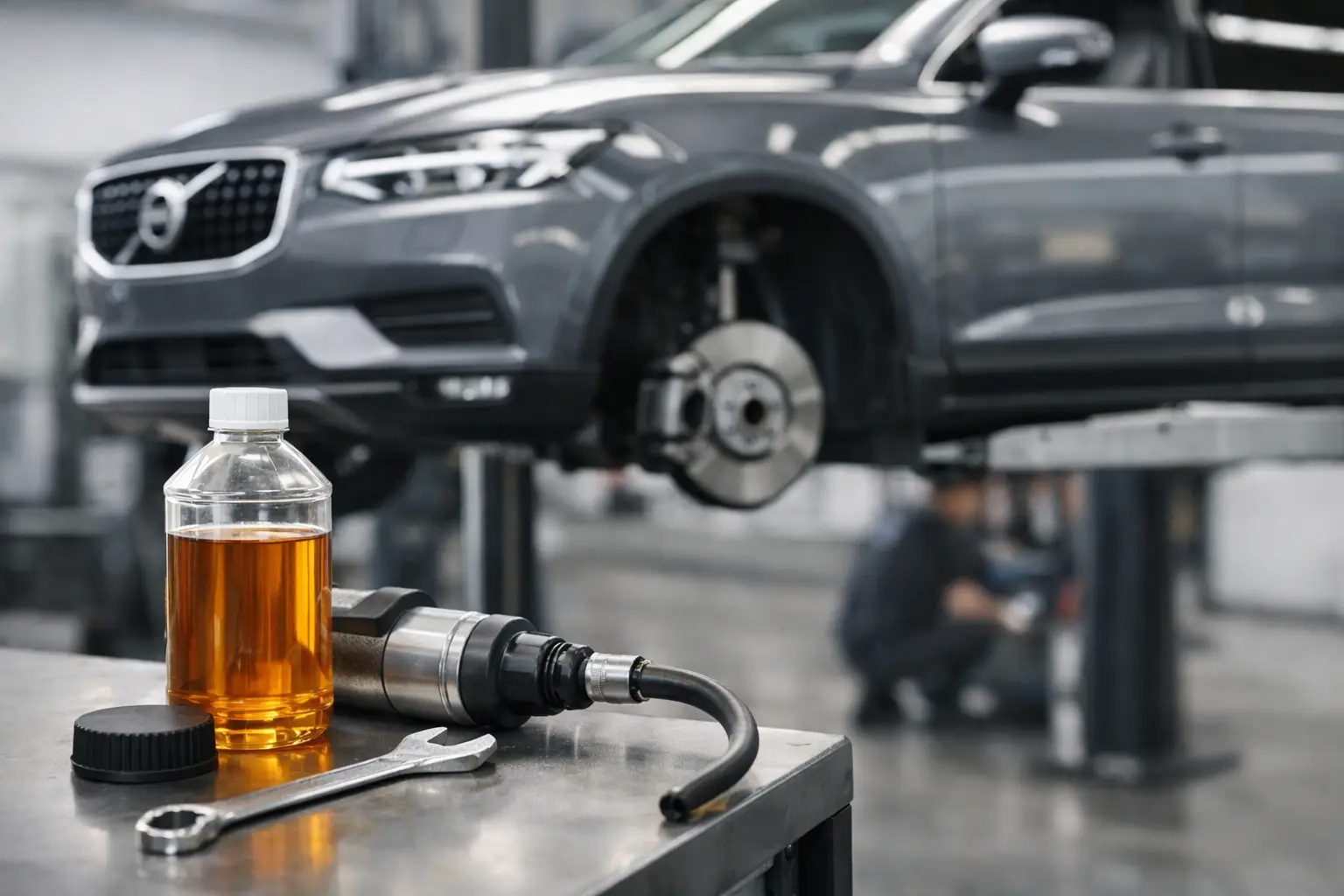
A brake pedal can still feel reasonably firm while the fluid behind it is past its best. That is why the Volvo brake fluid replacement interval should be treated as scheduled maintenance, not a job to delay until a warning light appears or braking feels wrong. Brake fluid works under extreme heat and pressure. Once its condition deteriorates, your car’s stopping performance has less protection when you need it most.
For most Volvo models, brake fluid is commonly replaced every two years. However, the correct interval for your vehicle depends on its model, age, service schedule and the specification of fluid it requires. A Volvo specialist will check the manufacturer guidance against your registration and servicing history rather than apply a one-size-fits-all rule.
Volvo Brake Fluid Replacement Interval: Why Two Years Matters
Brake fluid is hygroscopic, which means it naturally absorbs moisture from the air over time. The hydraulic braking system is sealed, but no system is completely immune to moisture entering gradually through hoses, seals and normal workshop servicing.
Water contamination lowers the fluid’s boiling point. During repeated or heavy braking, particularly in stop-start traffic, on steep descents or when carrying a full load, brakes generate substantial heat. Old fluid can boil sooner than fresh fluid, creating vapour in the system. Vapour compresses more easily than brake fluid, which can leave the pedal feeling soft and reduce braking response.
Moisture also promotes corrosion inside brake pipes, callipers, the master cylinder and the ABS hydraulic unit. These parts are far more expensive to repair than a routine brake fluid change. Replacing fluid at the right time is therefore about both safety and avoiding preventable wear in a critical system.
Singapore’s hot, humid conditions make this routine particularly sensible. High ambient humidity does not automatically mean a shorter interval for every car, but it is a good reason not to stretch the scheduled replacement date.
Check Your Volvo’s Actual Service Schedule
The two-year guideline is common, but your owner’s handbook and model-specific service information take priority. Volvo has used different maintenance schedules across generations, including petrol, diesel, hybrid and fully electric vehicles. Brake fluid specifications can also differ.
A proper service check should confirm the vehicle identification details, the date of the last documented replacement and the correct fluid type. Many Volvos require a high-quality DOT 4 brake fluid, but the workshop should never make assumptions based on a generic bottle on the shelf. Using the specified fluid protects the seals and supports the operation of systems such as ABS, stability control and electronic brake distribution.
If the service history is incomplete, it is usually wiser to replace the fluid rather than guess. The cost is modest compared with the value of the car and the consequences of compromised braking.
Do not rely on mileage alone
Brake fluid ages mainly with time, not mileage. A Volvo that covers only a few thousand miles a year can still have fluid that is overdue for replacement. This catches out owners of second cars, cars used mainly at weekends, and vehicles that have spent long periods parked.
Conversely, high-mileage cars may need closer brake inspections because pads, discs, hoses and callipers face more use. That does not replace the time-based fluid interval. Both the condition of the mechanical components and the age of the fluid matter.
Signs That Brake Fluid Needs Attention
Scheduled replacement is the best approach, but a few symptoms should prompt an earlier inspection. A soft or spongy pedal, a pedal that sinks unusually far before the brakes bite, or inconsistent braking response deserves immediate attention. So do brake warning lights, a visible fluid leak, or a brake fluid reservoir level that is unexpectedly low.
These signs do not always mean the fluid alone is at fault. Low fluid can indicate worn brake pads or a leak. A soft pedal may be caused by air in the system, a failing master cylinder or another hydraulic issue. Warning lights can relate to the brake system, ABS or electronic parking brake. The safe response is a professional inspection, not simply topping up the reservoir and carrying on.
Brake fluid that looks dark is another useful clue, but colour is not a definitive test. Fluid can discolour with age, while fluid that appears clean may still have absorbed moisture. A workshop should assess the maintenance record, inspect the system for leaks and, where appropriate, test the fluid rather than judge it by appearance alone.
What a Proper Brake Fluid Replacement Involves
A brake fluid replacement is more than removing a little fluid from the reservoir and adding fresh fluid. The old fluid must be flushed through the hydraulic lines so that the fluid reaching each wheel is renewed. The system is then bled correctly to remove air and maintain a firm, consistent pedal.
The technician should use the correct specification fluid and protect painted surfaces, as brake fluid can damage paintwork if spilled. During the job, it also makes sense to inspect the brake pads, discs, flexible hoses, callipers and fluid reservoir. This gives a clearer picture of the braking system rather than treating the fluid change in isolation.
Modern Volvo systems can require the right diagnostic equipment and workshop procedure, especially where electronically controlled braking or an electronic parking brake is involved. Incorrect bleeding can introduce air, affect pedal feel or leave faults that need further work. This is not an area for shortcuts or unsuitable fluid.
At MTE Garage, Volvo-focused technicians can carry out the brake fluid service with quality new parts and the correct workshop process, while checking for issues that could develop into a more costly brake repair.
Brake Fluid, Pads and Discs Are Different Jobs
Owners sometimes assume that replacing brake pads automatically means the brake fluid has been replaced too. These are separate maintenance items. Pads and discs wear through friction and are changed according to their condition. Brake fluid is changed because it ages and absorbs moisture.
There can be practical overlap. If brake work is being carried out and the fluid replacement is due, completing both at the same visit is efficient. But new pads do not refresh the fluid throughout the system, and fresh fluid does not make worn pads or scored discs safe.
A clear workshop estimate should separate the work involved. It should explain whether the recommendation is for scheduled fluid replacement, pad and disc wear, a leak repair, or a diagnostic investigation. This helps you approve the right work without paying for unnecessary replacements.
When an Earlier Change Makes Sense
There are situations where changing brake fluid before the normal interval is sensible. If the car has suffered a brake fluid leak, the system may need repair, refilling and bleeding. If a calliper, brake hose, master cylinder or ABS component has been replaced, fresh fluid and correct bleeding may form part of the repair.
An earlier replacement can also be worthwhile after a used Volvo is purchased with uncertain service records. The same applies if the vehicle has been driven hard, regularly towed heavy loads, or been exposed to long periods of demanding braking. These circumstances do not override Volvo’s official schedule, but they can justify a more cautious decision based on the vehicle’s condition.
For hybrid and electric Volvos, regenerative braking can reduce pad wear, but it does not remove the need for brake fluid maintenance. The hydraulic brakes remain a vital safety system and must work correctly whenever the car calls on them.
Make Brake Fluid Part of Planned Servicing
The easiest way to avoid an overdue brake fluid change is to record the date clearly after each replacement and schedule the next one with your regular service. Keep the invoice with your vehicle records. It supports a complete maintenance history and gives the next technician a reliable reference point.
If you are unsure when your Volvo’s brake fluid was last changed, arrange an inspection before the date becomes another unknown. A correctly maintained braking system is not a luxury upgrade. It is the quiet confidence that your Volvo will respond properly when traffic suddenly stops.