
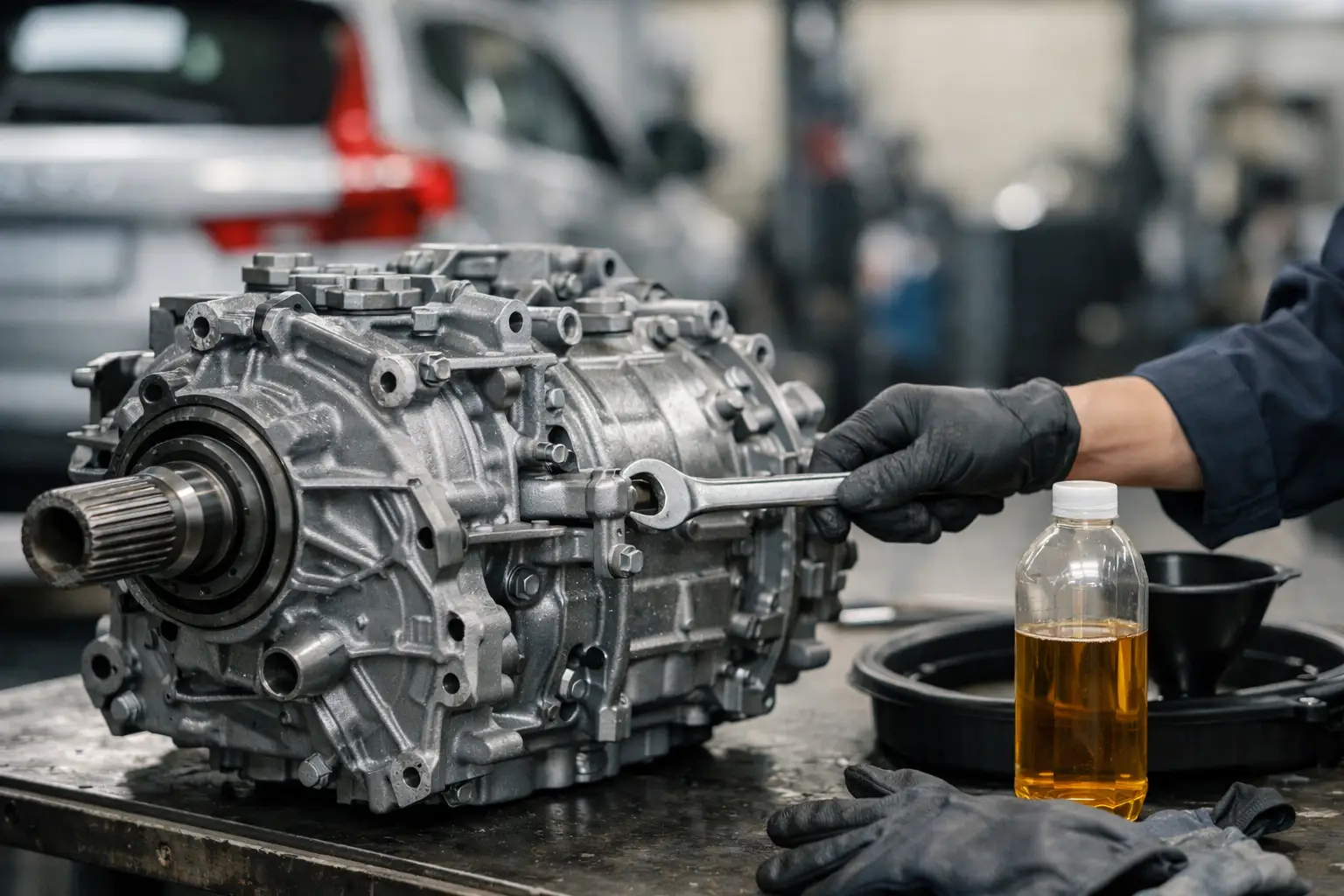
A Volvo that hesitates when pulling away, thumps during a gear change or takes too long to engage Drive is not giving you a minor inconvenience to ignore. Gearbox faults can progress quickly, particularly in busy Singapore traffic where heat, stop-start driving and frequent low-speed manoeuvres place added strain on the transmission. Knowing how to maintain a Volvo gearbox helps protect one of the most expensive and important systems in your car.
Volvo gearboxes are designed for smooth, dependable performance, but they still need the right fluid, careful driving habits and timely specialist attention. Whether your Volvo has a conventional automatic, Geartronic transmission, manual gearbox or a more modern dual-clutch unit, maintenance should be based on its exact model, age, mileage and use.
Know Which Volvo Gearbox You Have
There is no single maintenance schedule that suits every Volvo. Older models may use conventional automatic transmissions with a torque converter, while newer cars can have different gearbox designs and electronic control systems. A manual Volvo has different servicing needs again, with the clutch, flywheel and gear linkage becoming part of the wider picture.
This is why a proper workshop should check the vehicle identification details and service history before recommending any gearbox work. The correct transmission fluid specification matters. Using a fluid that looks similar, or choosing a cheaper universal alternative, can affect shift quality, lubrication and long-term component protection.
If you have bought a used Volvo and cannot confirm when the gearbox was last serviced, do not assume it has been looked after. Arrange an inspection and have the service records reviewed. A clear baseline gives you a sensible plan for future maintenance rather than relying on guesswork.
How to Maintain a Volvo Gearbox Between Services
The best gearbox maintenance starts with the way the car is driven. Automatic transmissions work hard in congestion, and repeated harsh acceleration followed by heavy braking creates unnecessary heat and wear. Let the car move off smoothly, allow the gearbox to select its ratios without forcing it, and avoid switching repeatedly between Drive and Reverse before the vehicle has fully stopped.
When parking on a slope, bring the Volvo to a complete stop with the foot brake applied before selecting Park. Use the electronic parking brake or handbrake correctly rather than relying on the Park position alone to hold the weight of the car. This reduces strain on the parking mechanism inside the transmission.
Avoid towing beyond your Volvo’s approved capacity or carrying heavy loads without checking the handbook guidance. Towing and sustained high loads generate additional gearbox heat. If your car regularly does this work, tell your workshop, as the transmission may need more frequent checks than a car used mainly for normal commuting.
Do not ignore engine or electrical problems either. Modern Volvo gearboxes rely on clean communication between sensors, the engine control system and the transmission control module. A weak battery, charging fault or engine misfire can sometimes create symptoms that feel like a gearbox fault. Accurate diagnostics prevent costly parts being replaced unnecessarily.
Get the Transmission Fluid Checked Properly
Transmission fluid is not simply an oil change item. It lubricates internal components, helps control operating temperature and, in many automatic gearboxes, plays a direct role in hydraulic gear selection. Over time, fluid can degrade through heat and contamination, even if there is no visible leak on your driveway.
Some Volvo service information may describe transmission fluid as long-life under particular operating conditions. In real ownership, however, long-life should not be mistaken for no-maintenance. Urban traffic, hot weather, short journeys, ageing seals and high mileage can all change the condition of the fluid.
A gearbox specialist can assess the vehicle’s service requirements, check for leaks and identify whether a fluid renewal is appropriate. The method matters as much as the fluid itself. Depending on the gearbox type and condition, the right approach may be a controlled drain and refill, a specified service procedure or further diagnosis before any fluid work is carried out.
Do not authorise a generic transmission flush simply because it is advertised as a quick cure for rough shifting. On a neglected, high-mileage gearbox with existing internal wear, the wrong procedure can fail to address the real problem. A professional inspection should come first.
Watch for Early Warning Signs
Gearbox issues are usually less expensive to investigate when they first appear. A slight change in shift quality may be caused by fluid condition, a sensor issue, a software adaptation concern, a valve body problem or internal wear. The only sensible response is to diagnose it before it becomes a breakdown.
Book your Volvo in if you notice four or more of the following signs:
- A delay before Drive or Reverse engages after selecting the gear.
- Jerking, shuddering or a hard bang during acceleration or gear changes.
- Engine revs rising without the car accelerating as expected.
- A warning message, check engine light or transmission warning light.
- Burning smells, red or brown fluid beneath the car, or repeated overheating warnings.
- A new whining, humming or clunking noise that changes with vehicle speed or gear selection.
One symptom does not automatically mean a gearbox rebuild is required. A worn engine mount, driveshaft problem or software issue can produce similar sensations. Equally, a car that still drives normally may already have an early fault stored in its control module. This is why diagnostic equipment and Volvo-specific experience are more useful than assumptions.
Do Not Delay Cooling System and Engine Maintenance
Your gearbox does not operate in isolation. Transmission temperature is a major factor in automatic gearbox life, and cooling issues can lead to overheating under load. Keep up with engine coolant servicing, investigate coolant loss promptly and do not continue driving a car that is showing an overheating warning.
Engine performance also affects gearbox behaviour. Rough idling, poor throttle response, turbo faults and airflow sensor issues can make gear changes feel late or abrupt because the gearbox is responding to incorrect engine data. Maintaining the engine properly helps the transmission deliver the smoothness Volvo owners expect.
For manual models, pay attention to clutch feel. A clutch that slips, bites unusually high, vibrates when engaging or makes noise when the pedal is pressed should be checked. Continuing to drive with a worn clutch can place extra stress on associated gearbox components and may turn a straightforward clutch job into a larger repair.
What a Proper Volvo Gearbox Inspection Should Cover
A worthwhile gearbox inspection is more than a quick road test. The technician should listen to your description of when the fault occurs, inspect for leaks and assess the condition of related components. Diagnostic checks can identify stored fault codes, sensor readings and transmission data that cannot be seen from outside the vehicle.
The car may also need a controlled road test to assess cold and warm shift behaviour. Some faults only appear after the transmission reaches operating temperature, while others are most noticeable during the first few minutes of driving. Clear information from the owner helps here: note whether the issue happens uphill, in traffic, when reversing or at a particular speed.
At MTE Garage, Volvo-focused servicing means the work can be based on the car’s actual condition rather than a one-size-fits-all recommendation. Quality replacement parts and the correct fluids are a better investment than repeated low-cost fixes that do not address the cause.
Keep Records and Act on Changes
Keep invoices for gearbox fluid work, diagnostics and repairs with your regular service records. This protects you when planning future maintenance and gives the next technician useful history if a concern develops. It can also support the value of a well-maintained Volvo when it is time to sell.
A smooth gearbox is easy to take for granted, which is exactly why small changes deserve attention. If your Volvo no longer shifts as cleanly as it should, arrange a professional inspection early and give the transmission the maintenance it needs before a minor concern becomes a major repair.