
A European car aircon servicing guide should start with one practical point: if your Volvo, BMW, Mercedes-Benz or Volkswagen is no longer cooling quickly in Singapore heat, do not wait for it to fail completely. Air-conditioning problems rarely improve on their own. What begins as weak cooling or an occasional musty smell can develop into compressor damage, a refrigerant leak or an electrical fault that costs more to put right.
Premium European vehicles use sophisticated climate-control systems. They are designed to deliver quiet, consistent cabin comfort, but they also rely on the correct refrigerant charge, clean airflow and accurate diagnostics. A proper service protects comfort for you and your passengers while helping to avoid unnecessary strain on costly components.
When your aircon needs attention
The clearest warning is air that is no longer cold, especially when the car is stationary or travelling slowly in traffic. However, a system can need servicing well before it loses all cooling power. If the airflow has become weak, the cabin takes longer to cool, windows mist up during rain, or there is an unpleasant smell when the blower starts, arrange an inspection.
Unusual noises deserve attention too. Clicking, rattling or squealing when the aircon is switched on may point to a worn compressor clutch, blower motor issue or a problem in the belt drive. Water dripping under a parked car after using the aircon is usually normal condensation. Water inside the cabin, particularly around the front footwells, is not. It can indicate a blocked condensate drain and may lead to mould, damp carpets and electrical damage if ignored.
Modern European cars may also show climate-control or engine warning messages. The aircon system is connected to engine management, cabin sensors, pressure sensors and, in some models, battery-management systems. A warning light does not automatically mean a major repair, but it does mean the vehicle needs proper fault-code diagnosis rather than guesswork.
What a European car aircon service should include
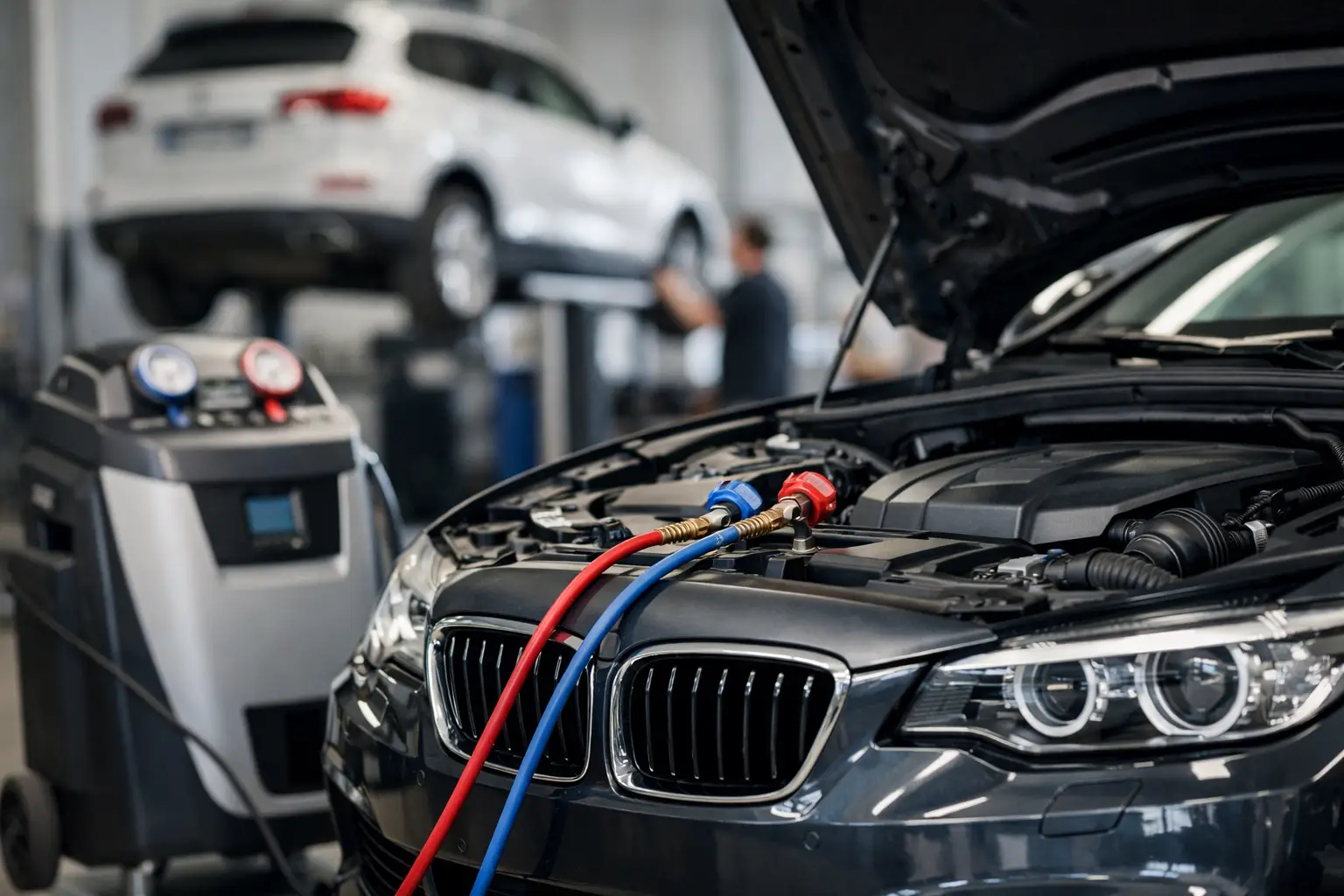
Aircon servicing is more than adding refrigerant. A workshop should first assess system performance and check for signs of leaks, damaged pipes, loose connections and compressor concerns. Refrigerant is recovered using suitable equipment, measured and replaced to the manufacturer-specified quantity. Too little refrigerant reduces cooling and lubrication. Too much can create excessive pressure and affect performance.
The technician should also check the cabin filter. A blocked pollen filter restricts airflow, forces the blower to work harder and allows dust and odours to build up in the cabin. For owners who regularly drive with children, carry passengers or are sensitive to dust, replacing it at the right interval makes a noticeable difference.
Cleaning the evaporator and treating the ventilation system may be recommended where there is a stale or damp smell. This is not just a cosmetic add-on. Moisture around the evaporator can encourage bacteria and mould, particularly in a hot, humid climate. The right treatment helps keep the air entering the cabin cleaner and more pleasant.
A thorough service should finish with performance testing. That means checking vent temperatures, pressure readings, blower operation and cooling consistency rather than simply confirming that cold air is coming out. On a European vehicle, diagnostic equipment can also identify sensor readings or control-module faults that a basic aircon machine cannot explain.
Why the correct refrigerant matters
Not every vehicle takes the same refrigerant. Older cars may use R134a, while many newer European models use R1234yf, which requires different handling and equipment. Using the wrong refrigerant, mixing oils or relying on a one-size-fits-all recharge is a risk no owner of a premium car should take.
The exact fill quantity matters as well. European manufacturers specify refrigerant weights precisely because the system capacity is often relatively small. Even a modest overcharge or undercharge can affect cooling efficiency and compressor protection. This is one reason specialist servicing is worth considering over a quick, low-cost top-up.
Common aircon faults on European vehicles
Refrigerant leaks are common, but they are not the only reason an aircon system stops cooling. Seals can deteriorate with age, stone damage can affect the condenser at the front of the car, and corrosion may develop around pipe connections. A recharge without finding a significant leak may provide temporary cold air, but the problem will return.
The compressor is another key component. It circulates refrigerant and oil through the system, and replacement can be expensive. A compressor may fail because of age, an internal fault, contamination or low refrigerant levels that reduce lubrication. Replacing only the compressor without dealing with contamination, a blocked component or the original leak can lead to repeat failure.
Electrical faults are increasingly relevant on newer Volvos and other continental models. Pressure sensors, cooling fans, relays, control modules and wiring can all affect aircon operation. If the system cools intermittently, works only at speed, or cuts out after a short time, the cause may not be a lack of gas. Accurate diagnostics prevent owners from paying for a recharge that does not solve the fault.
A weak blower motor or faulty blend-door actuator can also be mistaken for an aircon problem. In these cases, the system may produce cold air but fail to direct it properly into the cabin, or it may blow strongly on one side and weakly on the other. Climate-control systems with separate driver and passenger temperature settings need a more targeted assessment.
How often should you service your car aircon?
For most European cars in Singapore, an aircon inspection as part of routine servicing is sensible, with a more complete aircon service typically considered every one to two years. The right interval depends on the vehicle’s age, usage, aircon performance and service history. A car used daily in heavy traffic will place greater demand on the system than a weekend vehicle kept in covered parking.
There is no benefit in recharging a system that is cooling correctly simply because a fixed date has arrived. Equally, waiting until there is no cold air at all is false economy. A workshop should assess performance first and recommend work based on what the vehicle actually needs.
Use the aircon regularly, including during cooler or wet periods. Running it helps circulate lubricant through the system and assists with demisting. If you are leaving the car unused for an extended period, starting it periodically and operating the aircon can help keep seals from drying out.
Choosing the right workshop for a continental car
The difference between a basic recharge and a proper aircon repair often comes down to diagnosis. Ask whether the workshop can test for leaks, recover and refill refrigerant by weight, inspect the cabin filter and scan the vehicle where necessary. For a Volvo or another premium European marque, technicians should understand the model’s climate-control layout and have experience interpreting the faults that commonly affect it.
Quality parts matter where replacement is needed. A cheap condenser, compressor or pressure sensor may save money initially but can compromise reliability and create further labour costs later. The best value is not always the lowest quote. It is a clear recommendation, suitable parts and work completed properly the first time.
MTE Garage provides specialist support for Volvo owners and experienced servicing for a wide range of continental vehicles, with practical diagnostics and quality replacement parts where required. Whether the job is a routine service, a leak investigation or a more involved repair, the aim should be straightforward: restore dependable cooling without replacing parts unnecessarily.
Small habits that protect aircon performance
Keep leaves and debris clear from the area around the windscreen and front grille, as restricted airflow can affect the condenser and cabin ventilation. Replace the cabin filter when recommended, particularly if you notice reduced airflow or lingering odours. If cooling changes suddenly, do not keep turning the temperature lower in the hope that it will correct itself – book an inspection while the fault is still contained.
A well-functioning aircon system is not a luxury in regular heat and rain. It supports clear visibility, driver concentration and everyday comfort. Address the first signs early, choose a workshop that understands European systems, and your car is far more likely to stay cool when you need it most.