
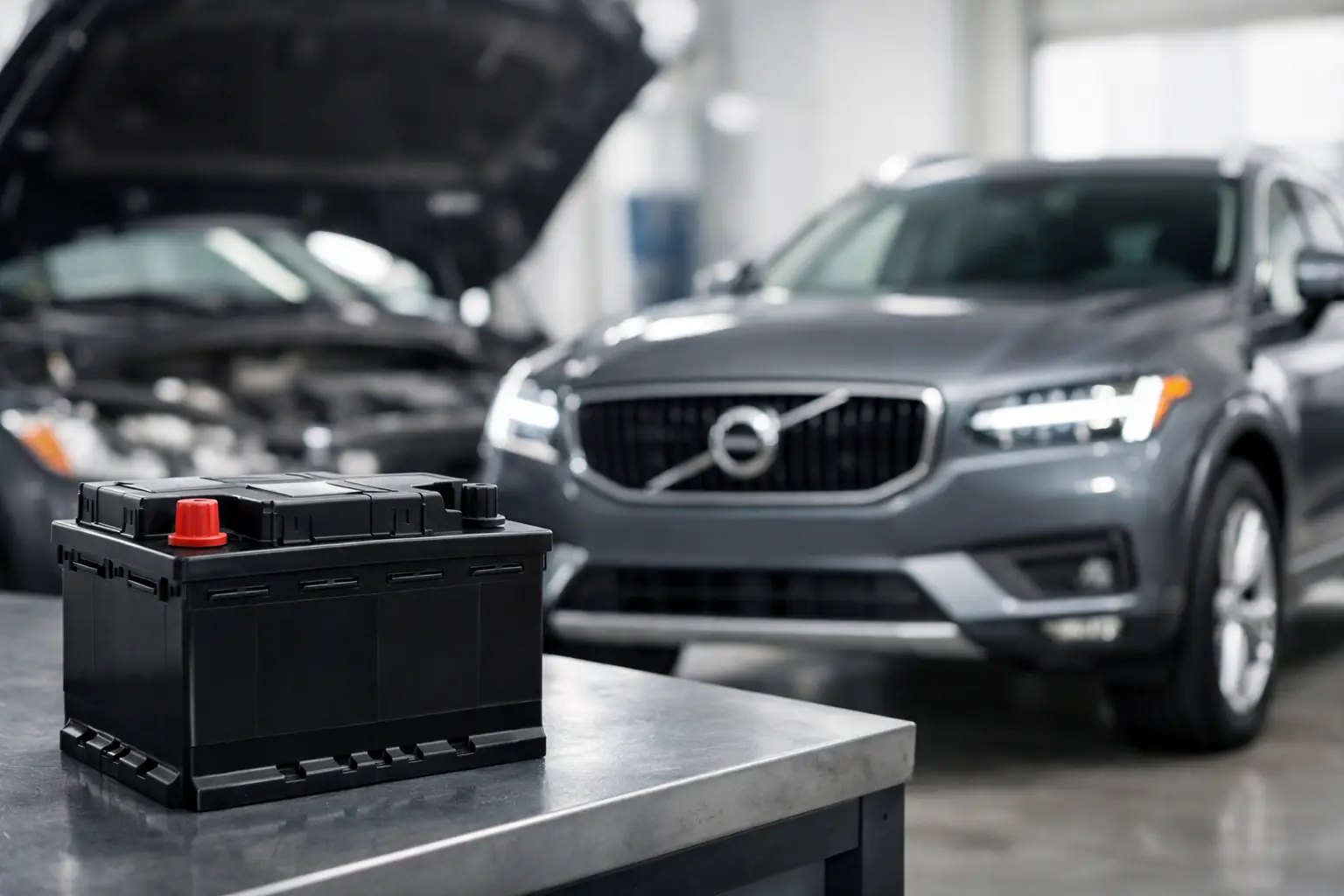
A Volvo that cranks more slowly in the morning, shows intermittent warning messages or repeatedly needs a jump-start is not asking for the cheapest battery on the shelf. Finding the best replacement battery for Volvo means matching the car’s electrical specification, driving pattern and fitted equipment – then installing and testing it properly.
Volvos are engineered around sophisticated electrical systems. Many models manage stop-start operation, multiple control modules, parking cameras, powered tailgates, climate control and safety technology even when the engine is not running. A battery that looks physically similar may still be the wrong choice if its capacity, cold cranking rating, technology or fitment is incorrect.
Why a Volvo Needs the Right Battery
A conventional lead-acid battery can work well in an older Volvo with modest electrical demand. It is not automatically suitable for a newer model fitted with stop-start and an advanced battery monitoring system. Fitting a lower-specification battery may save money at the counter but can lead to poor stop-start performance, dashboard warnings, shortened battery life and unreliable starting.
Singapore’s heat is another factor. High ambient temperatures can accelerate battery deterioration, particularly when a car is used mainly for short drives or left parked for extended periods. Short journeys do not always give the alternator enough time to replenish the energy used during starting and by the car’s electrical equipment.
The correct replacement is therefore based on specification, not just price or whether the engine starts after installation. A proper assessment also checks whether the charging system is healthy. There is little value in replacing a battery if a weak alternator, parasitic electrical drain or loose terminal is the underlying problem.
Best Replacement Battery for Volvo: AGM, EFB or Standard?
The best battery technology depends on the battery originally specified for your Volvo. The safest rule is simple: replace like for like, or upgrade only where the vehicle specification allows it.
AGM batteries for higher electrical demand
AGM stands for Absorbent Glass Mat. These batteries are designed for vehicles with frequent stop-start operation and high electrical loads. They recover charge quickly, handle repeated cycling better than standard batteries and are commonly fitted to later Volvo models with extensive onboard electronics.
If your Volvo was supplied with an AGM battery, it should normally be replaced with a quality AGM unit of the correct rating. Downgrading to a standard flooded battery may reduce service life and affect stop-start operation. AGM batteries cost more, but the extra cost reflects the technology and duty cycle they are built to handle.
EFB batteries for selected stop-start cars
EFB means Enhanced Flooded Battery. It sits between a conventional battery and AGM in terms of cycling capability. Some Volvo variants may use EFB technology, particularly where stop-start is fitted but electrical demand is lower than on models requiring AGM.
An EFB battery should not be replaced casually with a basic conventional unit. It may be possible to upgrade from EFB to AGM in certain applications, but this needs to be confirmed against the vehicle’s requirements and physical fitment. The best option is the one that meets Volvo’s intended specification rather than the one with the most impressive label.
Standard batteries for older Volvo models
Older Volvos without stop-start can often use a conventional maintenance-free lead-acid battery. Even then, capacity, terminal layout, case size and cranking output still matter. A battery with insufficient reserve capacity may start the car initially but struggle when lights, air-conditioning and accessories are in regular use.
What Must Match Your Volvo’s Specification
Battery selection should be based on the existing battery label, the vehicle identification details and a professional fitment check. The four details below are particularly important:
- Battery technology: AGM, EFB or conventional flooded lead-acid.
- Capacity: Measured in amp-hours (Ah), this indicates how much energy the battery can store.
- Starting output: Usually shown as cold cranking amps (CCA), this reflects the battery’s ability to deliver a strong starting current.
- Physical fitment: Case dimensions, hold-down arrangement, terminal positions and venting provisions must suit the battery tray and cable routing.
Capacity and CCA should meet, or where appropriate exceed, the manufacturer’s required rating without creating a fitment or charging issue. Bigger is not always better. An oversized battery may not secure correctly in the tray, while a battery with the wrong terminal orientation can leave cables strained or unable to reach safely.
For models where the battery is installed in the boot or cabin area, correct venting is also essential. Some batteries require a vent tube to direct gases safely outside the vehicle. This is a small installation detail with significant safety implications.
Battery Registration and System Resetting
Many later Volvo vehicles monitor battery condition and charging behaviour through a battery sensor or energy management system. After replacement, the car may need a battery reset, adaptation or registration procedure so it can recognise the new battery and charge it correctly.
The exact requirement varies by model and year. Not every Volvo needs the same procedure, but ignoring it where it is required can mean the vehicle continues to charge based on the condition of the old battery. That can reduce the life of the replacement or cause electrical functions to behave unexpectedly.
This is one reason a Volvo battery replacement should involve more than swapping two terminals. A specialist workshop can check fault codes, test charging voltage, preserve settings where necessary and confirm that the vehicle accepts the new battery correctly.
Signs Your Volvo Battery Is Nearing the End
A battery can weaken gradually, especially in hot conditions. Do not wait until the car fails to start in a car park or before an important journey. Arrange a battery and charging-system test if you notice repeated slow cranking, stop-start becoming unavailable, dimming lights or irregular electrical warnings.
Other common signs include a clock or infotainment system resetting, central locking responding slowly, or warning messages appearing briefly and disappearing after the engine starts. These symptoms do not always prove that the battery is at fault, as a charging or wiring issue can produce similar behaviour. Testing is the sensible first step.
Battery life is affected by use rather than age alone. A Volvo used for regular longer drives may keep its battery healthier than one driven only for short urban trips. Conversely, a car that sits unused for weeks can suffer from natural discharge and background electrical consumption. If the vehicle is stored or rarely driven, a suitable smart maintainer may help, provided it is used correctly.
Why Quality Matters More Than a Bargain Price
A low-priced battery can be tempting, but premium European vehicles are not the place for unknown specifications or old stock. A quality replacement from a reputable manufacturer provides clearer ratings, consistent construction and warranty support. The value is not just in the battery itself. It is in correct diagnosis, secure installation, terminal protection and confirmation that the charging system is doing its job.
At MTE Garage, Volvo battery replacement is approached as part of the vehicle’s wider electrical health. The right battery is selected for the model and equipment level, fitted securely with new quality parts, and checked so you leave with confidence rather than a temporary fix.
Choosing the Right Time to Replace It
If a professional test confirms that the battery is weak, replacement before complete failure is usually the practical decision. It avoids roadside disruption, protects against low-voltage faults and reduces the chance of being stranded during a busy working day or family journey.
Do not choose solely by a battery’s brand name, advertised warranty or highest available CCA figure. Provide the workshop with your Volvo model, year, engine variant and registration details, then let the correct fitment be verified. A properly matched battery, backed by a charging-system check, is the dependable way to keep your Volvo starting as it should.