
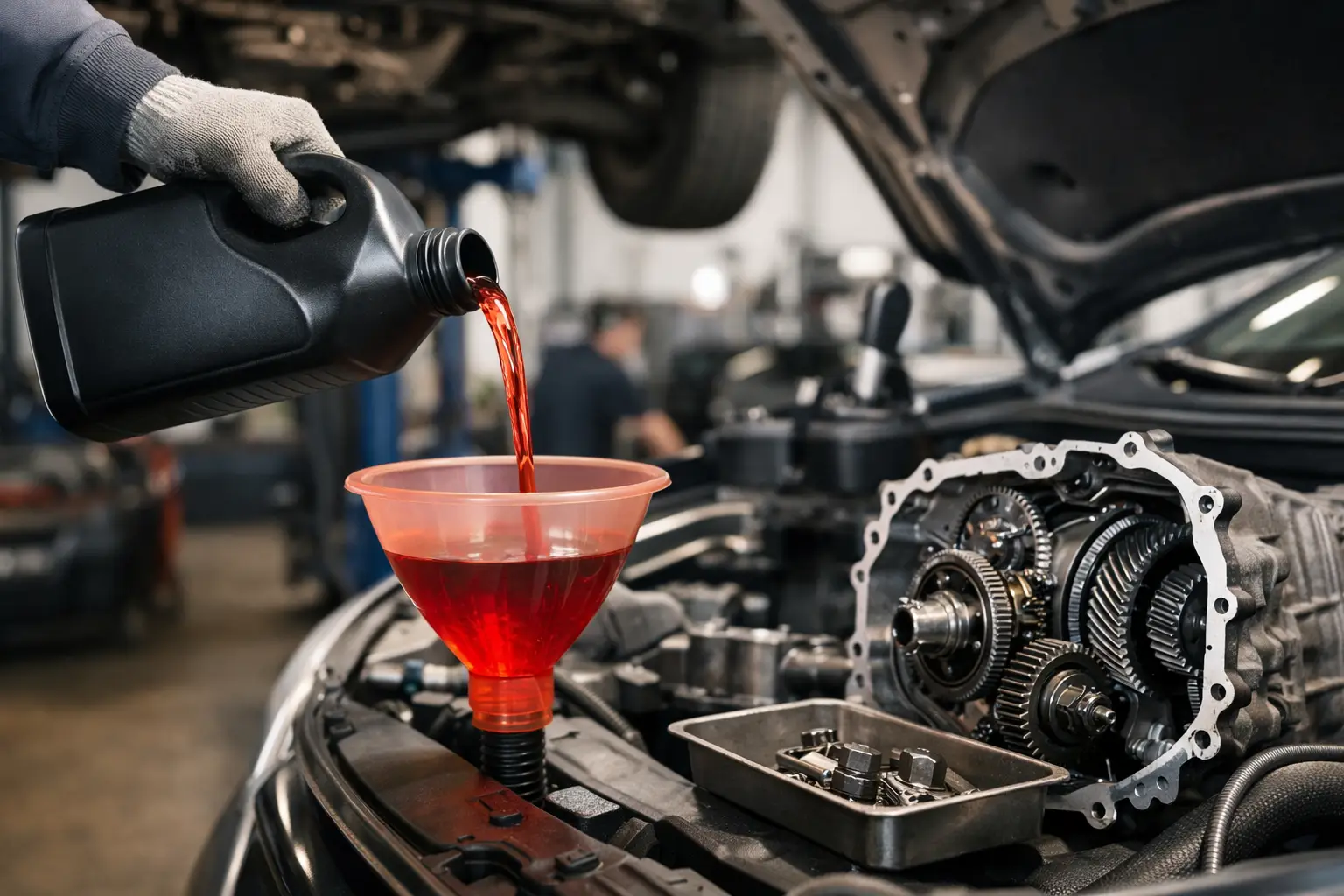
A gearbox that starts hesitating in traffic, changes gear with a jolt or makes a new whining noise is not a problem to leave until the next service. Many owners ask, when should gearbox fluid be changed, only after the transmission feels wrong. By then, the fluid may already be degraded and the gearbox may have been working harder than it should.
For Volvo and other European vehicles, gearbox servicing is not an optional extra. Fresh, correctly specified fluid helps control heat, lubricate internal components and support smooth gear changes. The right interval depends on the gearbox type, the manufacturer’s schedule and how the car is driven, but delaying the work simply because the vehicle still moves is a false economy.
When should gearbox fluid be changed?
The first answer is always: follow the service requirement for your exact model, engine and transmission. Gearboxes do not all use the same fluid or the same servicing interval. A Volvo automatic, a dual-clutch gearbox in a Volkswagen, and a conventional automatic in a Mercedes may each have different specifications and procedures.
As a practical guide, many automatic gearboxes benefit from a fluid and filter service around every 40,000 to 60,000 miles, or roughly every four to six years. Some manufacturers quote longer intervals or describe the fluid as “lifetime fill”. That wording deserves context. A vehicle’s expected lifetime and the real-world lifetime an owner wants from a premium car are not always the same thing.
In busy urban driving, short journeys, hot weather, steep car parks and regular stop-start use, gearbox fluid is exposed to more heat and stress. These conditions can shorten its useful life. If you tow, carry heavy loads, drive enthusiastically or have an older vehicle with an unknown service history, a specialist inspection is sensible before relying on a generic interval.
Manual gearbox oil often lasts longer than automatic transmission fluid, but it does not last indefinitely. It can still lose its protective qualities and collect fine metallic particles from normal wear. If a manual gear change feels notchy, especially when cold, checking the gearbox oil should be part of the diagnosis.
Why gearbox fluid condition matters
Automatic transmission fluid does more than lubricate. It helps operate hydraulic circuits, manage friction within clutch packs and carry heat away from internal parts. Once it becomes old, contaminated or overheated, it cannot do those jobs as effectively.
That can lead to harsher shifts, delayed engagement when selecting Drive or Reverse, slipping under acceleration and excess heat. Left unresolved, these issues may contribute to wear in valves, solenoids, clutch packs and other expensive transmission components. Replacing fluid at the appropriate time is far more affordable than repairing a gearbox after internal damage has developed.
Fluid condition matters particularly on vehicles that have spent years in city traffic. The car may have covered modest mileage, but its gearbox may have performed thousands of low-speed shifts. Mileage is useful, but it is not the only measure of wear.
Signs your gearbox fluid needs attention
A service interval should not be ignored, but neither should the symptoms between scheduled services. If the car is showing a change in behaviour, it needs proper assessment rather than guesswork.
Look out for delayed response when selecting a gear, revs rising without matching acceleration, shuddering during gear changes, rough or sudden shifts, and a whining or humming noise that was not there before. A burning smell, visible fluid leaks beneath the vehicle or a transmission warning light also need prompt attention.
These signs do not automatically mean the fluid alone is the cause. A fault could involve a sensor, software calibration, worn mount, mechatronic unit, torque converter or an internal mechanical component. That is why a quality gearbox service starts with checks and diagnostics, not an assumption that a fluid change will cure every problem.
The correct fluid and procedure are essential
Using “universal” fluid because it is cheaper can be an expensive mistake. Modern European transmissions are designed around very specific fluid properties. The wrong viscosity or friction characteristics can affect shift quality and, in serious cases, cause damage.
A professional workshop should identify the transmission fitted to the vehicle, use the approved or correct equivalent fluid, and follow the specified filling process. On many automatic gearboxes, the fluid level must be set at a particular temperature. Overfilling or underfilling can create problems just as surely as using unsuitable oil.
The filter, sump gasket, seals and drain plug may also need replacement, depending on the gearbox design and service procedure. Some transmissions have an external serviceable filter, while others require more involved work to access it. This is one reason gearbox servicing should be priced and planned for the individual vehicle, rather than treated as a one-size-fits-all oil change.
Fluid change, flush or inspection?
A standard gearbox fluid change drains the accessible fluid and refills the transmission with the correct amount. Because fluid remains in areas such as the torque converter and cooler lines on many automatics, it does not always replace every drop.
A fluid exchange or flush can replace a greater proportion of old fluid, but it is not automatically right for every car. On a well-maintained gearbox, it may be a useful part of the service plan. On a high-mileage gearbox with heavily degraded fluid, shifting deposits too aggressively can sometimes expose existing wear or create new issues. The vehicle’s history, condition and manufacturer guidance should determine the method.
If the service record is missing, do not assume the worst or rush into a flush. Start with a specialist inspection. The technician can assess leaks, check for fault codes, evaluate the fluid where possible and advise whether a measured fluid-and-filter service is the safer route.
Volvo gearbox servicing needs specialist knowledge
Volvo owners should be especially careful not to treat gearbox servicing as generic maintenance. Different Volvo generations use different automatic transmission designs, fluid requirements and reset or adaptation procedures. After a service, some vehicles may need gearbox adaptations checked or software-related issues ruled out to restore the best possible shift quality.
The same principle applies to BMW, Mercedes, Jaguar, Volkswagen and other continental makes. These vehicles are engineered to tight specifications. Quality replacement parts, the right fluids and accurate diagnostics protect both performance and long-term reliability.
At MTE Garage, gearbox work is approached as part of the vehicle’s overall condition, not as a quick add-on. A proper assessment helps separate a straightforward maintenance requirement from a developing transmission fault, so owners can make a clear decision before repair costs escalate.
Do not wait for a gearbox failure
There is no benefit in waiting for a transmission warning light or a serious shift problem before checking the fluid. Gearbox fluid generally deteriorates gradually, and the earliest signs can be easy to overlook: a slightly slower shift when cold, a faint judder in traffic or a small delay when moving from Park into Drive.
Book an inspection if your gearbox service is overdue, the vehicle has no clear transmission service history, or the way it changes gear has altered. A timely check with the correct fluid and procedure gives your car the best chance of delivering the smooth, dependable drive you expect from a premium European vehicle.