
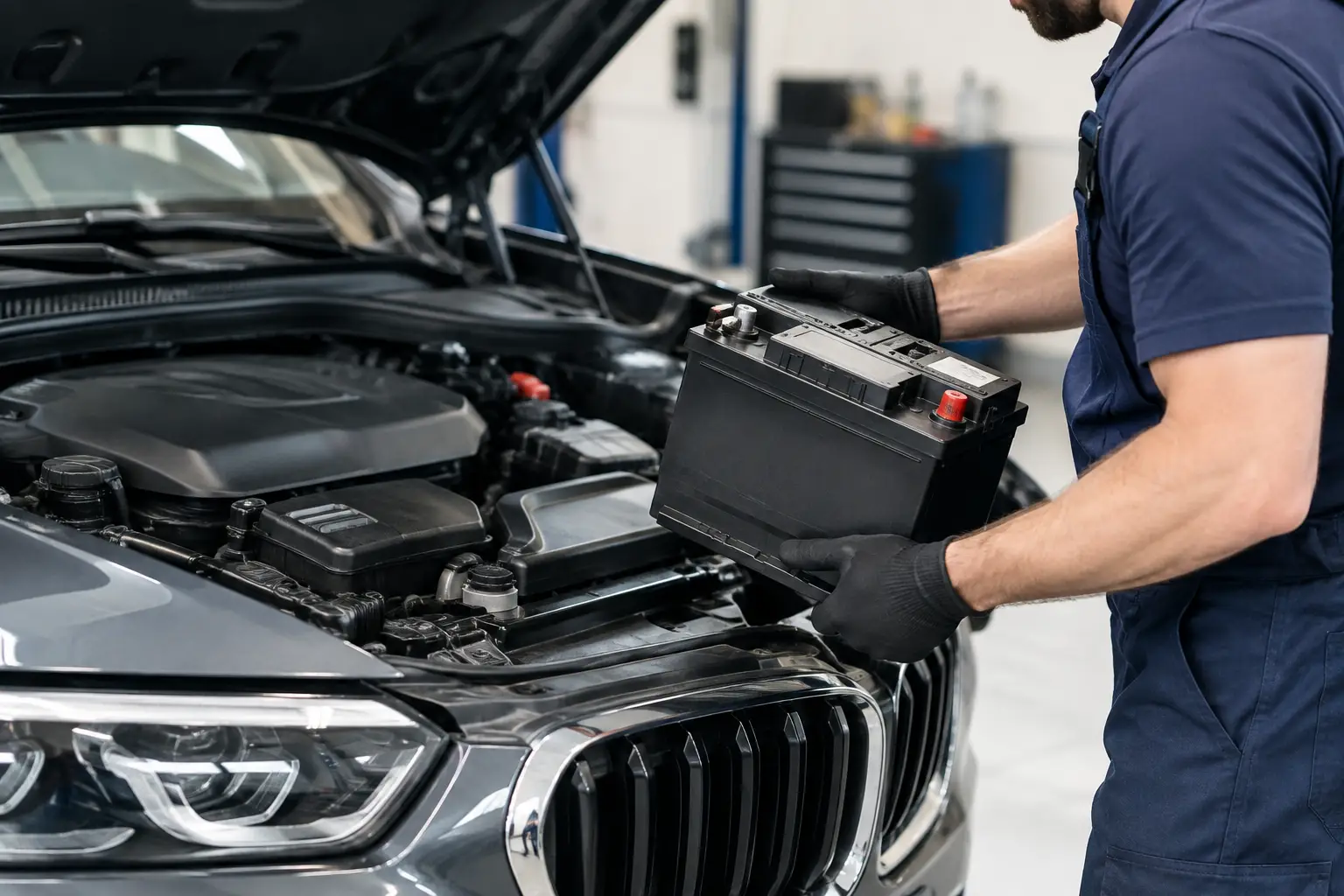
A car that starts a little more slowly each morning is not always asking for a new battery. But when a premium European car begins showing electrical warnings, stop-start faults or intermittent starting problems, delaying inspection can turn a straightforward car battery replacement into an inconvenient breakdown.
For Volvo, BMW, Mercedes, Volkswagen, Jaguar and other continental vehicles, the battery does far more than crank the engine. It supports safety systems, onboard computers, alarms, infotainment, climate control and electronic parking functions. Choosing the right replacement and fitting it correctly protects the reliability you expect from your car.
Signs Your Battery May Be Failing
A flat battery is the obvious warning sign, but it is rarely the first one. Many drivers notice subtle changes for days or weeks before the vehicle will not start. The engine may crank more slowly than usual, dashboard lights may flicker during start-up, or the infotainment system may take longer to load. On cars with stop-start technology, that function may stop operating even though the vehicle still starts normally.
Other signs include random warning messages, central locking that responds inconsistently, dim headlights at idle and electrical features that reset after the engine is switched off. These symptoms can also be caused by charging-system faults, loose connections or parasitic electrical drain. That is why a proper test matters before approving a replacement.
Singapore’s heat and humidity can shorten battery life. High temperatures accelerate chemical ageing inside the battery, while short journeys and long periods in traffic may not give the alternator enough time to fully recharge it. A battery that appears acceptable during a quick check can still struggle when placed under a proper load test.
Most car batteries last around two to five years, depending on driving habits, climate, battery type and the vehicle’s electrical demand. The date of the last replacement is useful, but it should not be the only deciding factor. A three-year-old battery in a heavily used Volvo with numerous electrical systems may need attention sooner than a four-year-old battery in a car used regularly for longer journeys.
Why Car Battery Replacement Is Not a One-Size-Fits-All Job
It is tempting to focus only on the physical size of the battery or the lowest price quoted. For modern European cars, that approach can create avoidable problems. The correct battery must match the vehicle’s specification, electrical requirements and battery-management system.
Battery Technology Must Match the Vehicle
Many newer cars use AGM or EFB batteries, particularly models fitted with stop-start systems. AGM batteries are designed to handle frequent charging and discharging cycles, while EFB batteries offer improved cycle resistance over conventional flooded batteries. Replacing an AGM battery with a basic conventional unit may save money at the outset, but it can reduce performance, shorten battery life and affect stop-start operation.
The battery’s capacity, cold-cranking rating, terminal layout and physical dimensions also need to be correct. A battery that fits in the tray is not automatically suitable. Too little capacity can leave the vehicle struggling to support its electrical load, while an incorrectly specified battery may be charged improperly by the car’s system.
For older vehicles, the specification may be more straightforward. For later Volvo and other premium European models, the vehicle identification details should be checked before selecting the replacement. This removes guesswork and ensures the part is appropriate for the car, not merely similar to the old battery.
Battery Registration Can Be Essential
Many modern cars monitor battery condition and adjust their charging strategy accordingly. When a new battery is fitted, the vehicle may need to be told that a replacement has been installed. This process is often called battery registration, battery coding or a battery-management reset.
The exact requirement depends on the model, year and system fitted to the vehicle. Some vehicles require a reset only, while others may need the replacement battery’s type and capacity entered through diagnostic equipment. If this step is missed where required, the car may continue using the charging profile intended for an ageing battery. That can lead to undercharging, overcharging, reduced battery life or warning messages.
This is one reason a professional workshop approach is worth considering. The job is not finished when the engine starts. The vehicle should be checked for fault codes, charging performance and correct system recognition after the new battery is installed.
What a Proper Battery Inspection Should Include
A good workshop does not simply remove the old battery and fit a new one. First, the technician should assess the battery’s condition, including voltage and its ability to perform under load. The charging system should also be tested. A failing alternator, damaged cable or poor earth connection can mimic a weak battery and will damage a replacement if left unresolved.
The battery terminals and retaining bracket need inspection as well. Corrosion at the terminals can restrict current flow and cause starting faults. A battery that is not correctly secured may be exposed to vibration, which can shorten its life and create a safety issue in an accident.
Once the correct replacement has been selected, the technician should fit it securely, protect any required memory settings and carry out registration or coding where applicable. A final check confirms that the charging voltage is within range and that no relevant warning messages remain. This process is especially valuable for owners of cars with sensitive electrical systems and multiple control modules.
When to Replace a Battery Before It Fails
Waiting until the car will not start is rarely the best option. A battery failure can happen in a shopping centre car park, outside the office or just before an early airport journey. It can also leave the alarm sounding, windows inoperative or the electronic tailgate unable to open.
Consider a proactive check before a long road trip, after the car has been unused for several weeks, or if the battery is approaching the upper end of its expected life. It is also sensible to book an inspection when stop-start has stopped functioning consistently or when electrical warnings appear and disappear without a clear reason.
Drivers who use their car mainly for short trips should be particularly cautious. Starting the engine requires a large burst of energy, and brief journeys may not replenish it. Occasional longer drives can help, but they do not fix an ageing or defective battery. A workshop test gives a clearer answer than relying on a dashboard message alone.
Avoid Common Battery Replacement Mistakes
The cheapest replacement is not always the best value. A lower-grade battery may have a shorter warranty, lower reserve capacity or the wrong technology for a stop-start system. It may work initially, then deteriorate quickly under the demands of daily city driving.
Another mistake is assuming that a warning light confirms the battery is at fault. Modern vehicles can display battery-related warnings when there is a charging fault, software issue, electrical drain or communication problem between modules. Replacing the battery without diagnosis may not solve the underlying issue.
Finally, avoid treating the old battery as ordinary waste. Vehicle batteries contain materials that require proper handling and recycling. A professional workshop can remove and dispose of the old unit responsibly while ensuring the replacement is fitted to the correct specification.
Car Battery Replacement for Volvo and European Vehicles
Volvo vehicles are engineered with sophisticated electrical systems, and their batteries should be selected and installed with the same care given to any other important service item. The same applies to BMW, Mercedes, Volkswagen, Jaguar, Renault, Maserati and Ferrari models, where the correct battery specification and diagnostic procedure can vary significantly between vehicles.
At MTE Garage, car battery replacement is handled as part of the vehicle’s wider electrical health. Our technicians check the likely cause of the fault, fit quality new parts and carry out the required system checks so you leave with confidence rather than a temporary fix. For owners looking for an alternative to dealership servicing, this means specialist attention, practical advice and competitive value without compromising on standards.
If your car is starting slowly, displaying electrical warnings or nearing the age when battery trouble becomes likely, arrange a battery and charging-system check before it leaves you stranded. A timely inspection is a small investment in dependable starts, protected electronics and calmer journeys.