
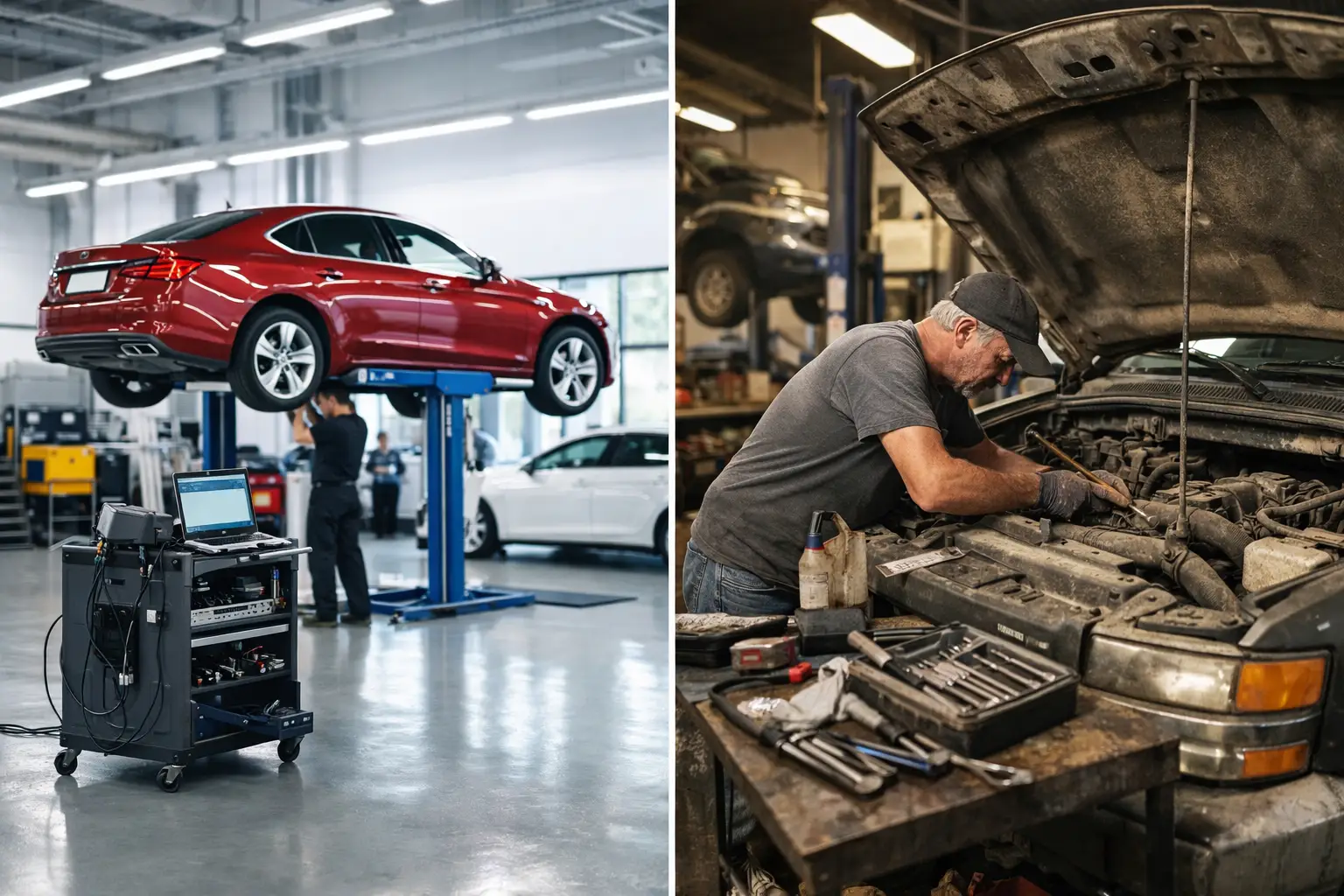
A warning light appears on your Volvo dashboard, the gearbox feels less responsive, or your air-conditioning is no longer keeping the cabin cool. The continental workshop versus general garage decision matters most at this point. Both may be able to carry out routine work, but the right choice can affect diagnostic accuracy, repair quality, cost control and your car’s long-term reliability.
For owners of Volvo, BMW, Mercedes, Volkswagen, Jaguar, Maserati, Renault, Ferrari and other European cars, a workshop should not simply replace the first part that appears likely to be faulty. It should understand the vehicle, test the cause properly and carry out work to a standard that protects your investment.
Continental workshop versus general garage: the real difference
A general garage usually works on a broad mix of vehicles. That can make it a practical option for straightforward jobs such as a basic oil change, tyre-related work or a simple battery replacement. A good general mechanic can be experienced, honest and capable. The issue is not that every general garage is unsuitable. The question is whether it has the specialist equipment, technical familiarity and parts knowledge your particular European car requires.
A continental workshop focuses on the systems, servicing requirements and recurring faults found in European marques. Its technicians see similar cars regularly. They are more likely to recognise the early signs of a model-specific issue, know where to begin testing and understand which repair approach is sensible rather than merely quick.
That distinction becomes valuable when the fault is not obvious. A warning message may be caused by a sensor, wiring issue, software-related fault, pressure loss or a worn mechanical component. Replacing parts without a clear diagnosis can become expensive very quickly. A specialist workshop is better placed to narrow down the cause before recommending work.
Brand-specific knowledge saves time and unnecessary parts
European vehicles are engineered with sophisticated electronics, integrated modules and precise service requirements. A standard diagnostic scanner may read a fault code, but a code is a starting point, not a complete repair instruction. The technician needs to interpret it in the context of the vehicle’s systems and symptoms.
For Volvo owners in particular, experience matters. Volvo models have their own servicing schedules, electronic architecture and known wear points. A technician familiar with the marque can approach engine management, transmission behaviour, cooling concerns, braking systems and electrical faults with practical knowledge rather than trial and error.
This does not mean a continental specialist will always have the lowest upfront quote. Proper diagnostics take time, and quality replacement parts cost more than unknown alternatives. However, a clear diagnosis can prevent the common false economy of fitting several unnecessary parts before the real problem is found.
At MTE Garage, the focus is on specialist Volvo knowledge alongside practical experience with other premium European cars. For drivers who want an alternative to dealership servicing, this can provide a useful balance: professional attention to the vehicle without paying for work that does not add value.
Diagnostics: where workshop capability shows
Modern cars communicate through a network of electronic control units. Problems with the engine, gearbox, anti-lock braking system, air-conditioning, parking sensors or lighting may all involve electronic diagnosis before any physical repair begins.
A continental workshop should have suitable diagnostic equipment and technicians who know how to use the information it provides. They should assess live data, check fault histories where relevant and inspect the related mechanical systems. If an engine warning light is on, for example, the repair may involve more than clearing the code and sending the car away.
A general garage may have capable scanning equipment too, so do not assume otherwise. Ask what diagnostic process will be used, whether the garage has experience with your make and model, and whether it will contact you before replacing parts. Direct answers are a good sign that the workshop works methodically.
Parts quality is part of the repair
The quality of replacement parts has a direct effect on performance and durability. This is particularly relevant for brakes, suspension components, filters, batteries, ignition parts and sensors. A low-priced part may fit initially but fail early, create further fault codes or compromise the way the vehicle drives.
A reputable continental workshop will explain the parts being used and recommend an appropriate option for the job. Depending on the repair, that may be a genuine manufacturer part or a quality equivalent from an established supplier. The aim should be dependable performance, not simply the lowest figure on an invoice.
New parts and warranty-backed work also give drivers more confidence after the repair. If a garage cannot clearly state what it is fitting, where the part comes from or what support applies if there is a problem, it is reasonable to ask more questions before authorising work.
Servicing is more than changing oil
Routine maintenance is where many owners make their decision based on price alone. An oil and filter service may look identical on paper, but the details matter. The correct oil specification, filter quality, service interval checks and inspection of wear items all contribute to the condition of a continental vehicle.
A specialist workshop is more likely to consider what is due next and identify developing issues before they become disruptive repairs. That might include brake wear, a weak battery, cooling system concerns, gearbox servicing requirements, air-conditioning performance or exhaust deterioration.
A general garage can be suitable for basic maintenance if it follows the manufacturer’s requirements exactly and has a reliable track record with your vehicle type. For an older European car with straightforward needs, this may be a sensible value option. For a newer model, a vehicle with warning lights, or a car with a service history you want to protect, specialist servicing is usually the safer choice.
Comparing cost fairly
The cheapest quote is not always the least expensive repair. A quote should be compared on what is actually included: diagnostic time, labour, parts brand, fluids, consumables, warranty and any follow-up checks. A lower figure can become less attractive if it excludes the work needed to confirm the repair has resolved the fault.
Dealership servicing can offer manufacturer processes and access to brand resources, but it may come at a premium. A well-equipped continental workshop can often provide the expertise and quality standards many owners want at a more competitive price. This is why it is worth comparing workshops on capability and transparency, not only on the total shown at the bottom of a quotation.
Be cautious of a garage that promises a firm repair price before inspecting a complex fault. A professional workshop can give an initial assessment and explain likely causes, but it should be honest when further diagnosis is required. That is not uncertainty for its own sake. It is the correct way to avoid guessing.
When a general garage may be enough
There are situations where a general garage is a perfectly reasonable choice. If you need a wiper blade, a bulb, a puncture repair or a straightforward battery replacement, convenience and a trusted local relationship may matter more than specialist knowledge.
The balance changes when work involves engine diagnostics, gearbox behaviour, electronic faults, braking systems, air-conditioning leaks, recurring warning lights or a repair that has already been attempted elsewhere. These are the moments when continental experience can save time and reduce the risk of repeat visits.
Questions to ask before booking
Before handing over your keys, ask whether the workshop regularly services your make and model, what diagnostic equipment it uses and which parts it intends to fit. Also ask whether the quotation includes labour, fluids and taxes, and whether the repair and parts are covered by a warranty.
The response should be clear, practical and free from pressure. You should know what the garage has found, why the work is recommended and what can wait if the repair is not urgent. That level of transparency makes it easier to plan maintenance and gives you confidence in every decision.
Your European car does not need dealership pricing for every job, but it does deserve a workshop that understands how it is built. Choose the garage that can explain the fault plainly, use quality parts and carry out the work with the care your vehicle needs.