
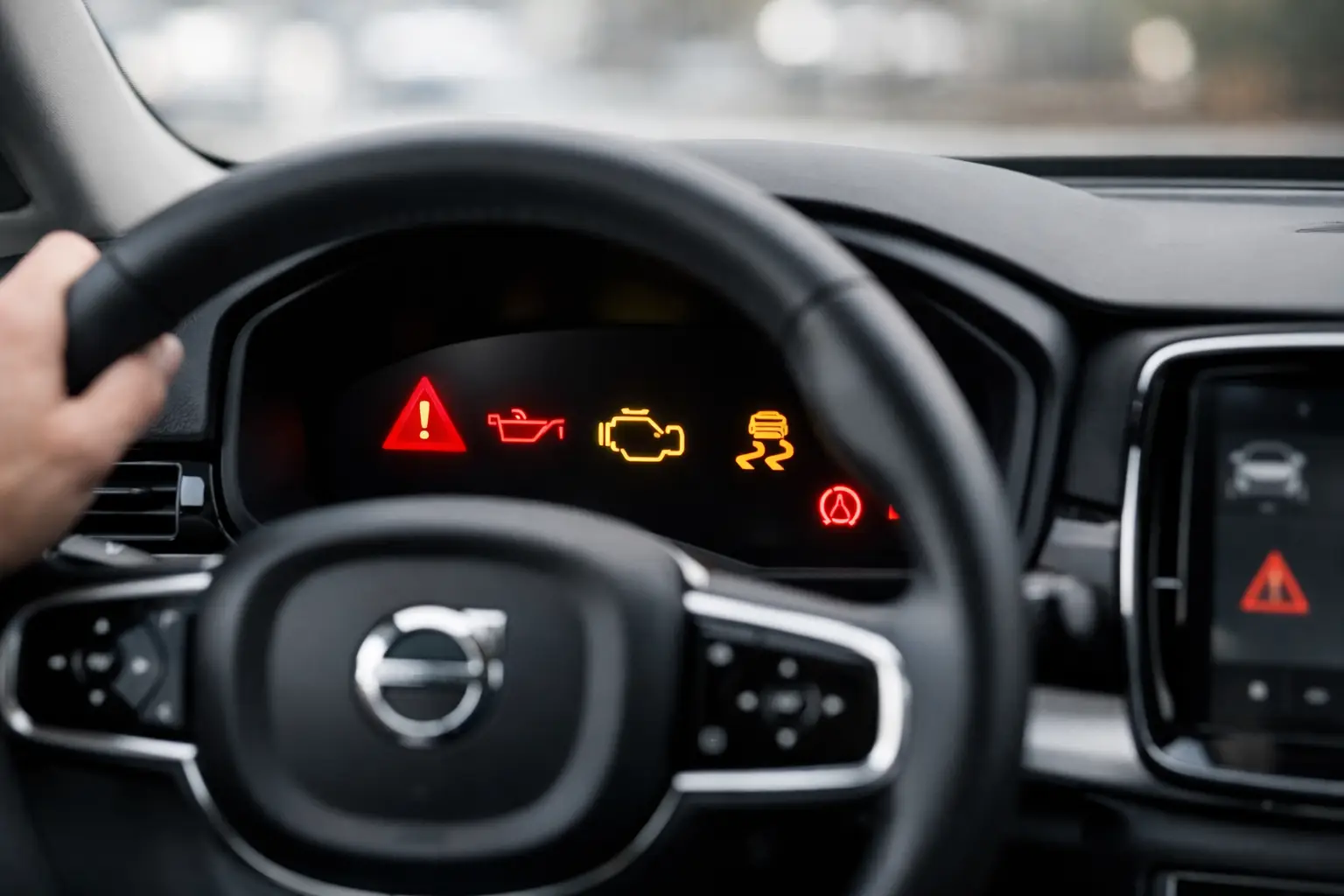
A warning light appearing during the morning school run or on the way to work is not something to ignore and hope will disappear. The top Volvo dashboard warnings are designed to give you an early chance to protect the engine, brakes, safety systems and transmission before a small fault becomes an expensive repair.
Volvo dashboards can display a symbol, a text message or both. The exact wording varies between models, from older S60s and XC90s to newer XC40s, V60s and mild-hybrid cars, but the priority is usually clear: red means stop when it is safe, amber means arrange a check soon, and green or blue normally confirms that a system is operating.
Top Volvo Dashboard Warnings That Need Immediate Action
A red warning is your Volvo telling you that continued driving may cause damage or compromise safety. Do not rely on the car feeling normal. Pull over safely, switch on your hazard lights if needed and assess the message before deciding what to do next.
Low oil pressure warning
The red oil-can symbol is one of the most serious warnings on any Volvo. It indicates low engine oil pressure, which is different from simply being due for an oil top-up. Without proper oil pressure, vital moving parts are not being lubricated correctly. Even a short drive can lead to major engine damage.
Stop the engine as soon as it is safe. After allowing the vehicle to settle on level ground, check the oil level only if your model’s instructions allow it. If the level is correct or the warning remains after topping up with the correct oil, do not drive further. The cause could be a leak, blocked oil passage, failed sensor or oil pump fault, and it needs professional diagnosis.
Engine temperature or coolant warning
A red temperature warning, overheating message or steam from under the bonnet means the cooling system needs immediate attention. Modern Volvo engines are engineered to tight tolerances. Driving while overheating can damage the cylinder head, head gasket or turbocharger.
Stop safely and turn off the engine. Do not open the coolant cap while the engine is hot, as pressurised coolant can cause serious burns. A low coolant level may point to a hose leak, radiator issue, water pump problem or an internal engine fault. Repeated coolant warnings deserve a proper inspection, even if the temperature later returns to normal.
Brake system warning
A red brake warning may mean the handbrake is still applied, but it can also indicate low brake fluid or a fault within the hydraulic braking system. If the pedal feels soft, travels further than usual, or braking performance has changed, treat it as urgent.
Check that the parking brake has released fully. If it has and the warning stays on, do not assume it is a minor sensor issue. Brake fluid can fall because brake pads are worn, but it can also fall because of a leak. Your Volvo should be checked before it is used normally again.
Battery charging system warning
The red battery symbol does not necessarily mean you need a new battery. It usually means the battery is not being charged while the engine is running. A failing alternator, drive belt, wiring fault or battery-management issue may be responsible.
You may be able to move the car a short distance, but avoid unnecessary electrical loads such as high air-conditioning settings, heated screens and phone charging. Once the stored battery power is exhausted, the engine can stop and may not restart. Arrange a diagnostic check promptly.
Amber Volvo Dashboard Warnings You Should Book In For
Amber warnings are not always a reason to stop immediately, but they should not be left until the next scheduled service. Your Volvo may reduce power or switch off certain functions to prevent further damage.
Check engine warning
The engine-shaped amber light can be triggered by many faults, from an ignition misfire or air leak to an emissions-control problem, sensor fault or fuel-system issue. If the light is steady and the car drives normally, book diagnostics as soon as practical.
If the light flashes, especially with a rough-running engine, reduce speed and stop when safe. A persistent misfire can allow unburnt fuel into the exhaust, damaging the catalytic converter. Continued driving often turns a manageable repair into a far more costly one.
ABS and stability-control warnings
An ABS warning means the anti-lock braking function may be unavailable. Normal braking may still work, but hard braking on a wet road can be less controlled. A stability-control or traction-control warning may similarly mean that wheel-slip assistance is unavailable.
These lights are commonly caused by wheel-speed sensors, damaged wiring or issues around the wheel bearing. The car may remain driveable with care, but it should be inspected soon, particularly before long journeys or periods of heavy rain.
Tyre pressure monitoring warning
A tyre-pressure monitoring system warning can mean one or more tyres are underinflated, or that the system needs recalibration after tyres have been changed or repaired. Check pressures when the tyres are cold and use the recommended figures for your specific Volvo and wheel size.
Do not simply inflate the tyre and forget the warning. If pressure has dropped noticeably, inspect for a puncture, nail or damaged valve. Uneven wear can also affect handling, fuel consumption and tyre life.
Diesel particulate filter and emissions messages
Diesel Volvos may show a particulate filter warning when the DPF is unable to regenerate fully. This often happens when the vehicle is used mainly for short, slow trips. Where the message and vehicle condition permit, a sustained drive at normal road speeds may help regeneration complete.
However, do not keep driving in the hope that every DPF warning will clear. A persistent message, loss of power, engine warning light or rising oil level requires workshop attention. Forced regeneration, sensor testing or diagnosis of the underlying cause may be needed. The same applies to AdBlue or emissions-system warnings on relevant models.
When a Warning Is a Message Rather Than a Fault
Some Volvo alerts are reminders rather than breakdown warnings. A washer-fluid message, low fuel warning, service reminder or door-open indication does not usually require urgent repair. Even so, read the dashboard message rather than focusing only on the symbol.
Warnings related to keyless start, parking sensors, cameras, adaptive cruise control and collision-avoidance functions can be affected by dirt, heavy rain, low battery voltage or a temporary sensor obstruction. Clean cameras and radar areas carefully, then see whether the message clears. If it returns regularly, the system should be checked rather than disabled or ignored.
Why Volvo-Specific Diagnostics Matter
A generic code reader may identify a broad fault area, but it does not always reveal the reason a warning appeared. Volvo systems communicate across multiple control modules, including engine, gearbox, braking, safety and electrical systems. The stored fault code, live data and vehicle history need to be considered together.
This matters particularly when several warnings arrive at once. A weak 12V battery, charging fault or poor electrical connection can trigger messages from unrelated systems. Replacing parts based on one dashboard symbol alone can waste money and leave the real problem unresolved.
At MTE Garage, Volvo-trained technicians can assess the warning, identify the cause and explain what repair is actually required. Quality replacement parts and clear recommendations help owners make the right decision for the vehicle, whether the issue is routine maintenance or a fault requiring urgent attention.
What to Tell Your Workshop
A useful diagnosis starts with accurate information. Note the exact dashboard wording, whether the light was red, amber or flashing, and what happened immediately before it appeared. Mention any loss of power, unusual noise, vibration, smoke, fluid leak or difficulty starting.
Also say whether the warning disappears after restarting. A warning that clears is not automatically harmless, as intermittent faults often leave useful information stored in the vehicle’s control units. A photograph of the display can be particularly helpful when messages appear briefly.
The best response to a Volvo warning is measured rather than panicked: stop for red alerts, book amber alerts promptly, and let a specialist determine the cause before the fault has a chance to affect the rest of the car.