
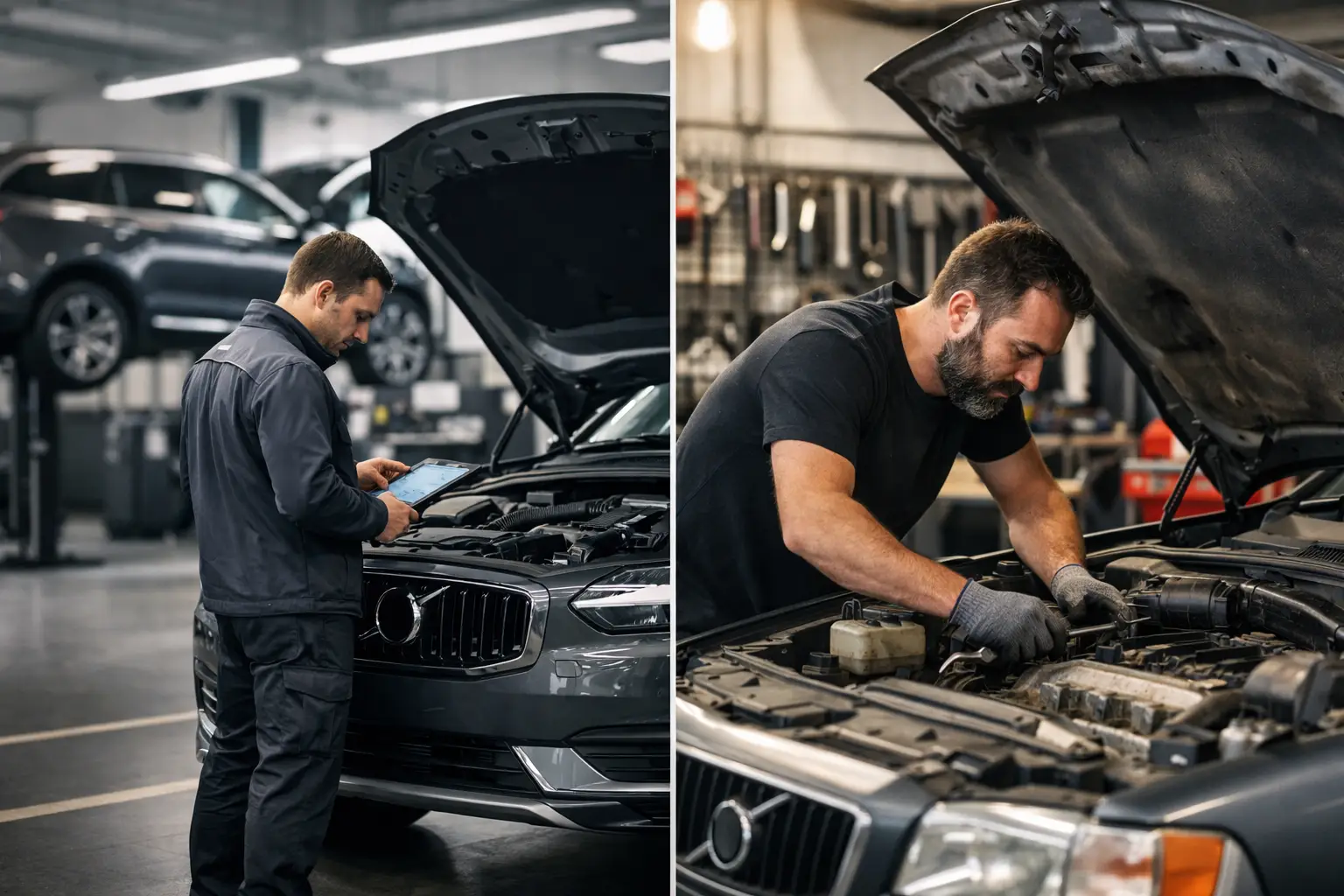
A warning light appearing before the school run, air-conditioning that has stopped cooling, or a service reminder due just before a long trip all lead to the same question: Volvo dealer vs specialist servicing – which is the right choice? For most owners, the answer comes down to the level of expertise needed, the age and condition of the car, and whether you are paying for value or simply following the dealer route by default.
A Volvo is built with its own systems, service requirements and common wear points. It deserves more than a generic oil change and a quick visual check. The right workshop should understand the vehicle, diagnose faults accurately and fit quality parts that support safe, dependable motoring.
Volvo dealer vs specialist servicing: the real difference
A main dealer is directly tied to the manufacturer. It will have access to official service procedures, brand campaigns and the latest factory information. This can be a sensible option for a newer Volvo that remains under a manufacturer-backed service plan or has a fault requiring a specific manufacturer action.
A Volvo specialist offers a different kind of value. A good independent workshop focuses its daily experience on the brand, often with technicians who have worked on Volvo vehicles for years. Rather than applying a broad process to every make, the team knows what to look for on common Volvo engines, gearboxes, suspension systems, electrical components and climate-control units.
That familiarity matters. A fault code is only the starting point of a diagnosis. The real work is determining why it appeared and whether the cause is a sensor, wiring issue, worn component, software-related concern or a separate mechanical problem. An experienced specialist is less likely to replace parts blindly just because a diagnostic machine has identified a code.
For many owners, the decision is not dealer quality versus lower standards. It is about choosing a workshop with the right technical knowledge, clear advice and a fair approach to labour and parts.
When dealer servicing may be the better fit
Dealer servicing can be appropriate, particularly during the early years of ownership. If your Volvo is covered by a manufacturer warranty, prepaid service package or recall programme, a dealer may be the most straightforward route. It also gives you a full dealer record, which some buyers may value when purchasing a very new or high-specification vehicle.
There are situations where dealer access is useful. Certain software updates, technical campaigns and warranty assessments may need to be handled through the authorised network. If you are leasing the vehicle, check the agreement before arranging any work elsewhere. Lease providers can set their own maintenance conditions.
However, a dealer stamp is not the only evidence of responsible ownership. A complete service history with itemised invoices, correct servicing at the required intervals and records of quality replacement parts can be equally persuasive to a sensible used-car buyer. For an older Volvo, condition and maintenance quality usually matter more than the logo on the invoice.
Why Volvo specialists appeal to long-term owners
Once a Volvo is outside a service package or manufacturer warranty, a specialist workshop can be a practical choice. Labour rates are often more competitive, while the workshop can still provide thorough scheduled servicing, advanced diagnostics and repairs using suitable quality parts.
The strongest benefit is focused experience. Volvo models may share broad engineering principles, but each generation has its own known issues and servicing priorities. A specialist can recognise early signs of worn engine mounts, brake wear, cooling-system problems, suspension noises, battery weakness or transmission concerns before they develop into a more expensive repair.
A specialist should also explain the work in plain language. You should know what requires attention now, what can be monitored, and what the likely cost implications are. This is particularly useful when a car is a few years old and several maintenance items begin to arise at the same time. Not every recommendation needs to be accepted immediately, but safety-critical repairs should never be deferred simply to reduce the bill.
At MTE Garage, Volvo-focused knowledge is combined with practical workshop experience. The aim is straightforward: provide dependable servicing and repair work using new, quality parts without charging dealership-level prices for routine maintenance.
Parts, diagnostics and workmanship matter more than labels
A lower quote is only good value if the work is done properly. Whether you choose a dealer or specialist, ask what is included in the service and what parts will be fitted. An oil and filter change is not identical across every workshop. The correct oil specification, the quality of the filter, inspection checks and proper service reset all make a difference.
For replacement components, there can be several suitable options. Genuine Volvo parts are supplied through the manufacturer network. Original-equipment parts may be produced by the same supplier to the required standard. Reputable aftermarket parts can also be appropriate for selected repairs. The correct choice depends on the component, the vehicle’s age and your priorities.
Brakes, steering, suspension and engine components should never be treated as areas for unknown or poor-quality parts. A professional workshop should be willing to state what it is fitting and why. It should also stand behind the workmanship and applicable parts warranty.
Diagnostics deserve the same scrutiny. Modern Volvos rely on multiple control modules and sensors. A workshop needs proper diagnostic equipment, but equipment alone does not fix cars. The technician must interpret live data, carry out physical checks and confirm the repair rather than guessing. That is where trained experience saves time, repeat visits and unnecessary parts costs.
Cost: compare the work, not just the headline price
Dealer labour rates are typically higher because of their manufacturer overheads, facilities and operating model. A specialist can often offer more competitive pricing, especially for routine servicing, brakes, batteries, air-conditioning work, exhaust repairs and wear-and-tear items.
Still, do not compare a basic advertised service with a detailed quote without checking the scope. One price may include only oil, filter and a brief inspection. Another may include more comprehensive checks, diagnostic scanning, fluid inspection and a clearer report on upcoming maintenance. The cheaper figure is not always the less expensive choice over the life of the car.
Ask for an itemised estimate before authorising major work. It should separate labour, parts and any diagnostic charge, while making clear whether additional faults could change the final figure. This is not about finding the lowest possible number. It is about avoiding surprises and understanding what you are paying for.
How to choose the right workshop for your Volvo
Your decision should be based on the car in front of you, not a blanket rule. Before booking, consider four practical questions:
- Is the Volvo still under a manufacturer warranty, service plan or lease condition that requires dealer involvement?
- Does the workshop have proven Volvo diagnostic and repair experience, not simply general servicing capability?
- Will it use suitable new parts and provide a clear explanation of the options available?
- Can it give you an itemised quote and a record of the work completed?
If the answer to the first question is yes, contact the dealer first, especially for warranty or recall-related concerns. If the car is older, out of warranty or due for normal maintenance, a capable Volvo specialist is often the better balance of expertise, convenience and cost.
Do not wait for a small issue to become a major repair
Servicing is not only about meeting a schedule. It is the opportunity to catch problems while they are manageable. A slight vibration under braking, a coolant warning, uneven tyre wear, a delayed gear change or a battery that struggles to start in the morning should be checked early.
Ignoring these signs can turn a contained repair into a larger bill. Regular servicing also protects the parts that are easy to overlook, including filters, fluids, belts, hoses and air-conditioning components. For families and professionals relying on their Volvo every day, that prevention is worth more than any short-term saving.
Choose the dealer when manufacturer support is genuinely needed. Choose a specialist when you want Volvo-specific care, transparent advice and strong value for ongoing ownership. The best time to make that decision is before the warning light becomes an inconvenience.